10 top tips for designing and making theatre costumes
I’ve spent the last few months designing and making costumes for a new theatre production called UNFORTUNATELY, which will be performed at Shoreditch Town Hall in London. I originally started my career in costume with an apprenticeship in my early twenties; since then running Made My Wardrobe has pulled me away from costume work. But when my best friend Josie - who runs the theatre company ThisEgg - approached me with the brief for this show I couldn’t say no. A huge chunk of the dramaturgy of the show is built around the costumes. Rather than being an after thought, the costumes are as important as the script for the audience to understand the narrative.
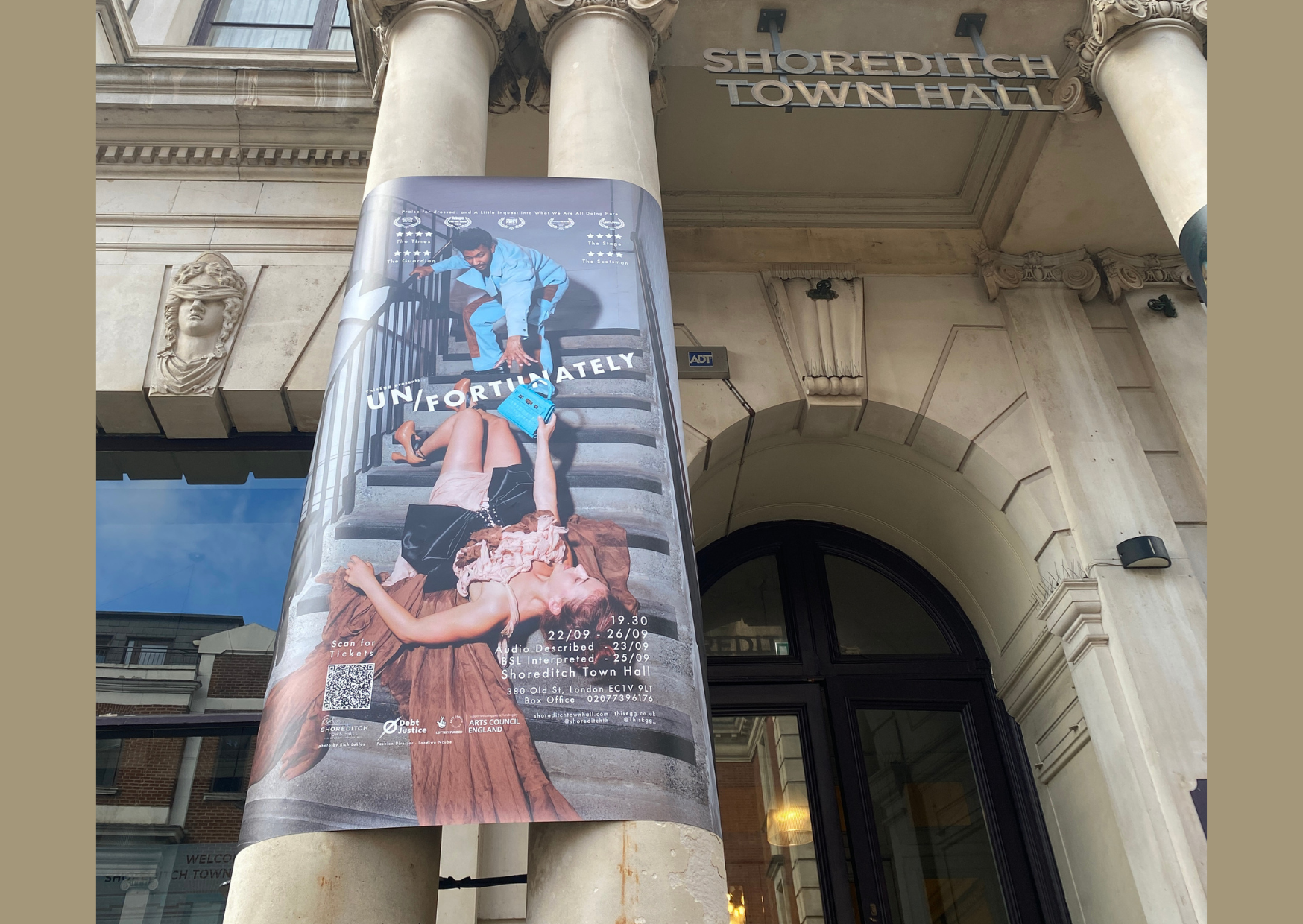
I hadn’t done a costume job on this scale in a while and I was very much up for the creative challenge. Every scene has a new costume, which makes it visually stimulating for the audience. It feels a bit like watching one of those makeover scenes in 90’s romcoms where someone tries on twenty different looks to find the right one, except in this show the looks are politically and socially charged. The show’s main theme explores our relationship to money: what it tells us about ourselves, and about each other. A big topic that was thoroughly dissected during the devising process.
I learnt a lot during this process, so I thought I would jot down some reflections here in case they are useful to any other aspiring costume designers and makers out there…
Top Tip 1: Get in the rehearsal room
The first part of my job doesn’t involve any designing or making. I simply get in the rehearsal room and watch what’s going on. I find it impossible to design a costume for a scene just by reading from a script - I need to see the performers’ movements, power dynamics, physicality, and vulnerability. During this job I sat in rehearsals for at least three days before I started designing anything.
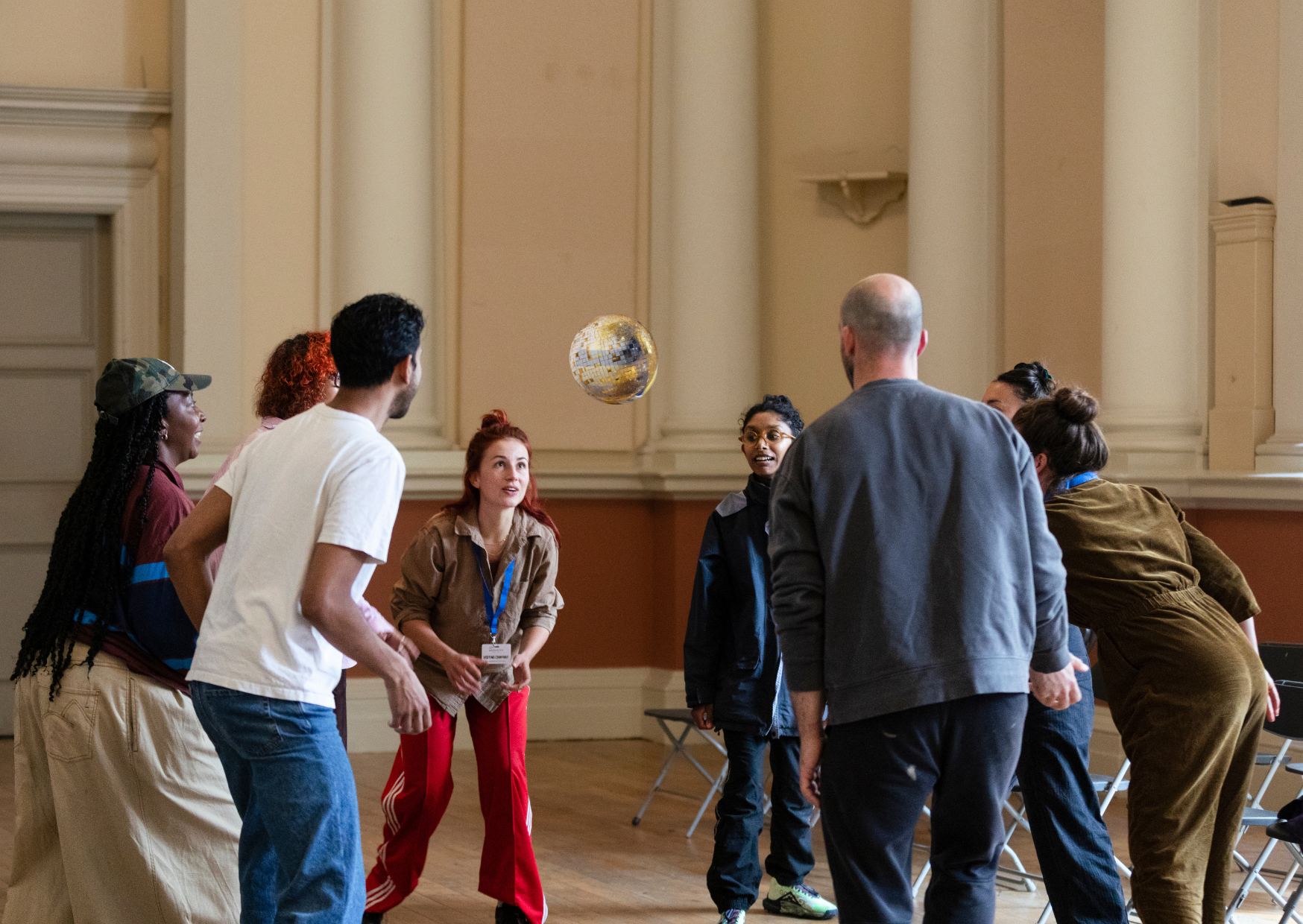
ThisEgg’s rehearsal team warming up
Top Tip 2: Make mock-ups
I then went away and spent a week sourcing and making quick mock-ups that the actors can play with in the rehearsal room whilst devising the show. You have to leave your ego at the door, because you know these versions will not be the best things you have made. But that doesn’t matter. As long as you can give the actors the feel of a character, that’s enough to spark creativity in them. You will then quickly start to see what works and what doesn’t.
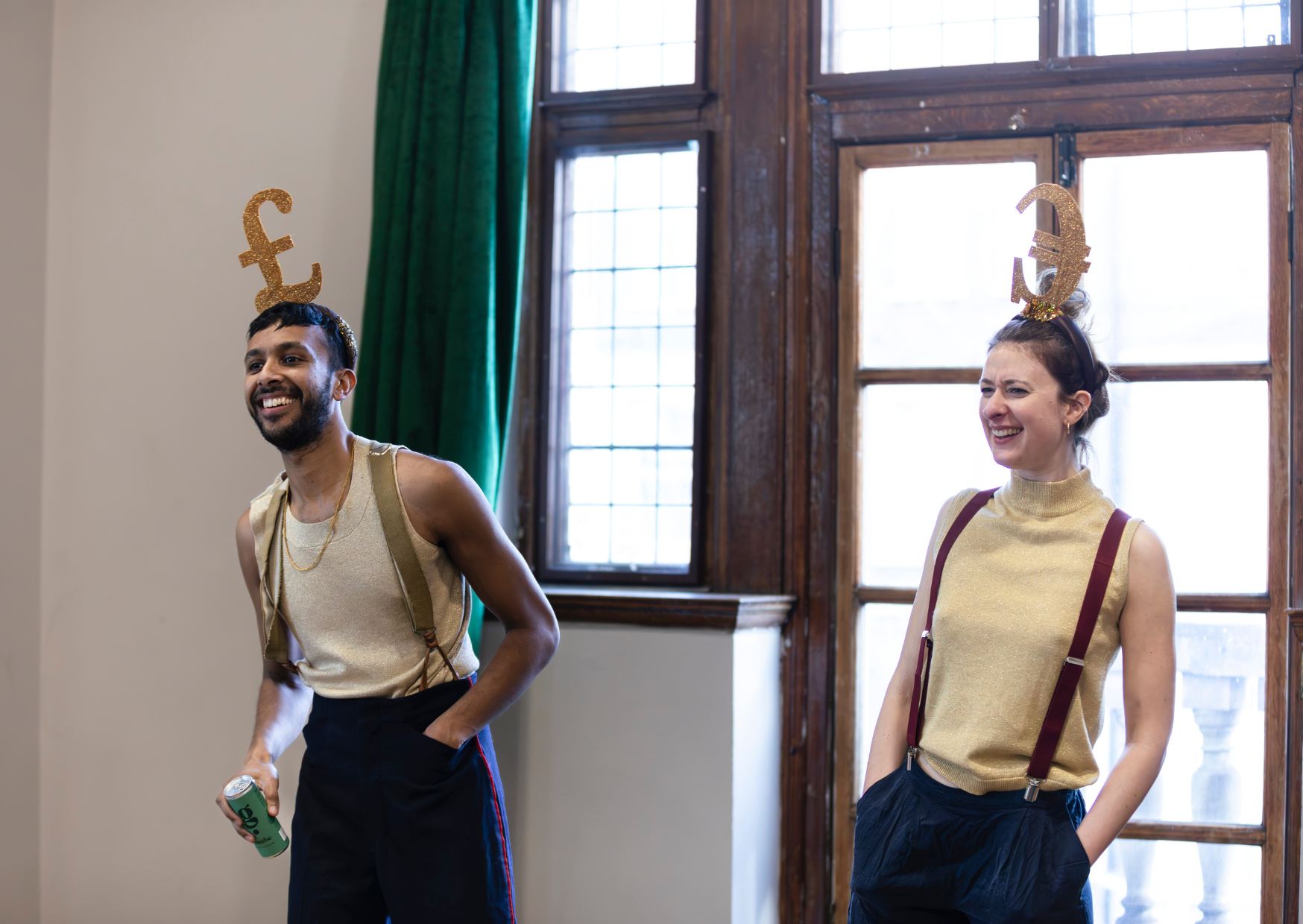
We didn’t end up using these currency headpieces but they were a quick way for the actors to play with the theme in rehearsals
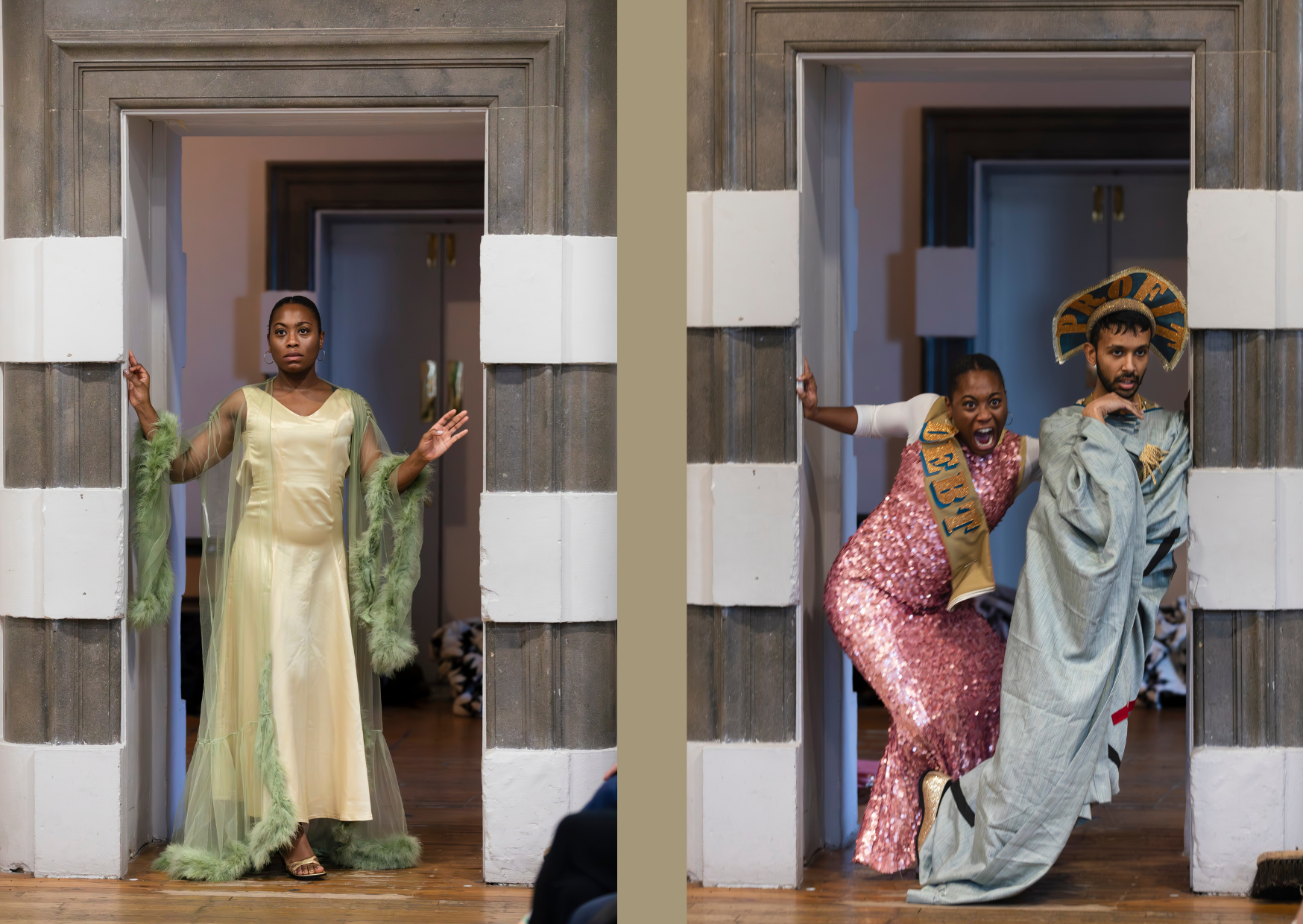
We ended up using versions of these costumes which were originally just in the room to experiment with, but we found elements of them that really worked
Top Tip 3: Find your team
We knew early on that the costumes on this job would be more work than one person could do in the time we had. We also knew they needed to have a feeling of high end fashion to them. I was excited to team up with Londiwe Ncube, who has worked as a stylist and fashion director for Condé Nast. We divided the looks up into items that I would make from scratch and items she would source and style. We have different skillsets, but that was what made this team work.
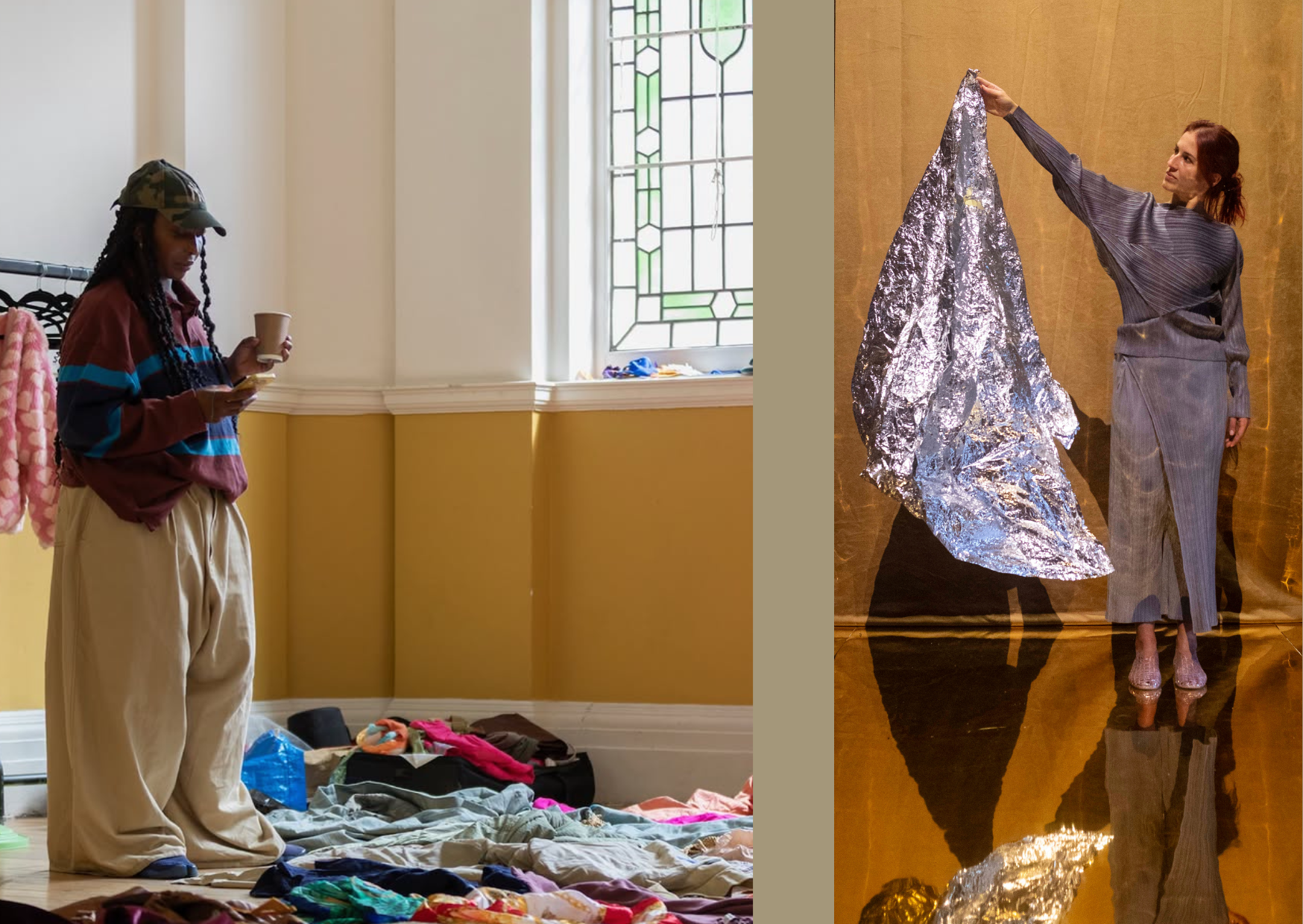
Londiwe has the magical ability to find anything you might need on Vinted! I’m obsessed with this Issey Miyake inspired look she sourced.
Top Tip 4: Stick to your colour palette
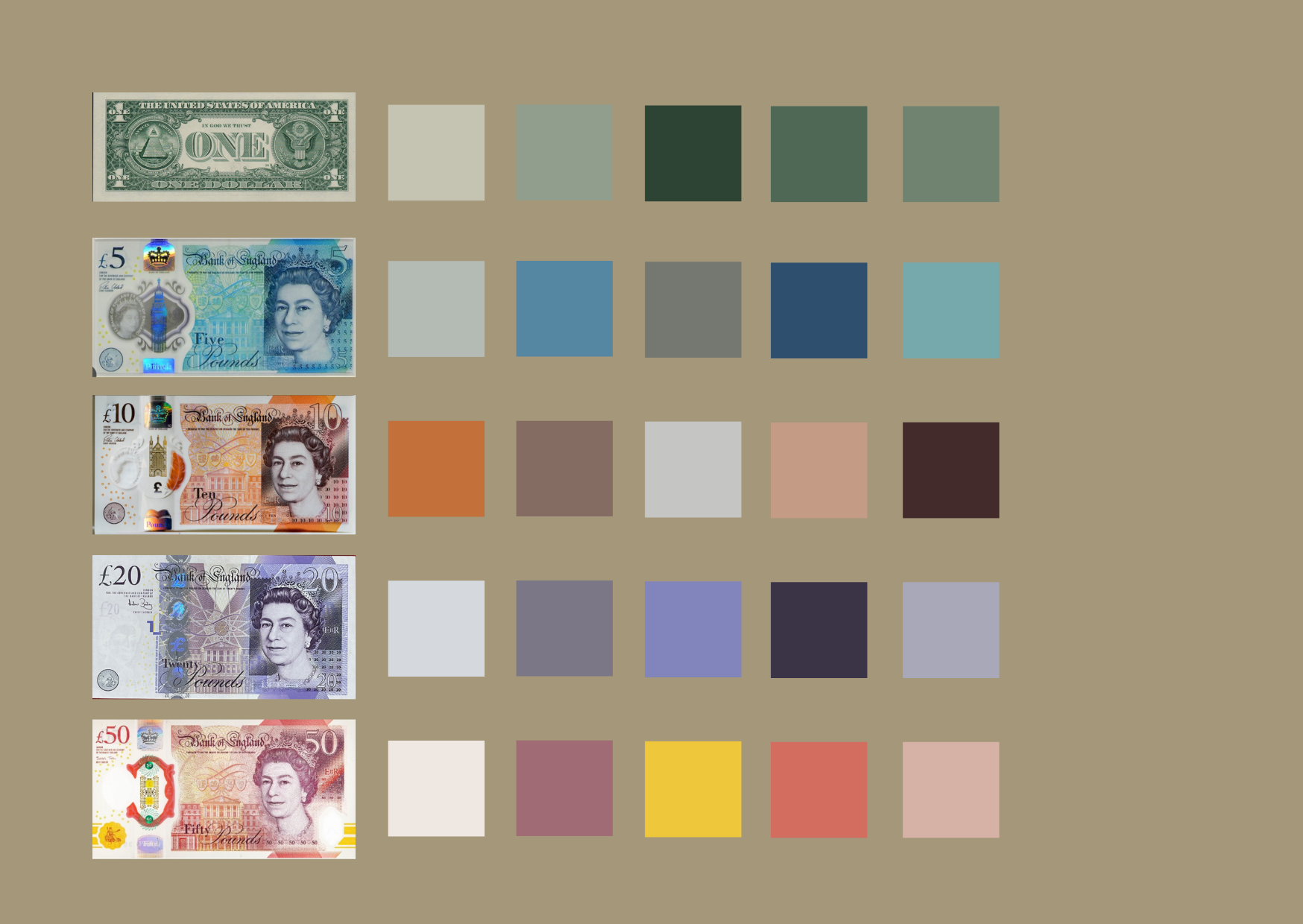
We wanted to feel the essence of money running subliminally through the show, so we took our colour palette directly from banknotes. I don’t know if anyone watching the show will notice this, but it helped us create a cohesive vision. We played around with characters in the show who have more power - such as God or The Coloniser, represented in the green of the US dollar. Meanwhile, everyday characters with less power have the blue of the £5 note. We then decided we would use red and gold as our accent colours.
Top Tip 5: Use mood boards to communicate your vision to the director, performers, and technical team
I’m no illustrator and I’ve always found fashion illustrations really hard to read as a maker, so I prefer to use mood boards. In the example below, the original reference I was given for the Democracy character was that she would be marrying Capitalism and we needed the dress to be over the top - like the wedding dress in Gone With The Wind. I took the ruffles in that wedding dress but I wanted to make it feel more modern, so I also drew from the designs of Molly Goddard, who utilises gathering in a really interesting way to build volume.
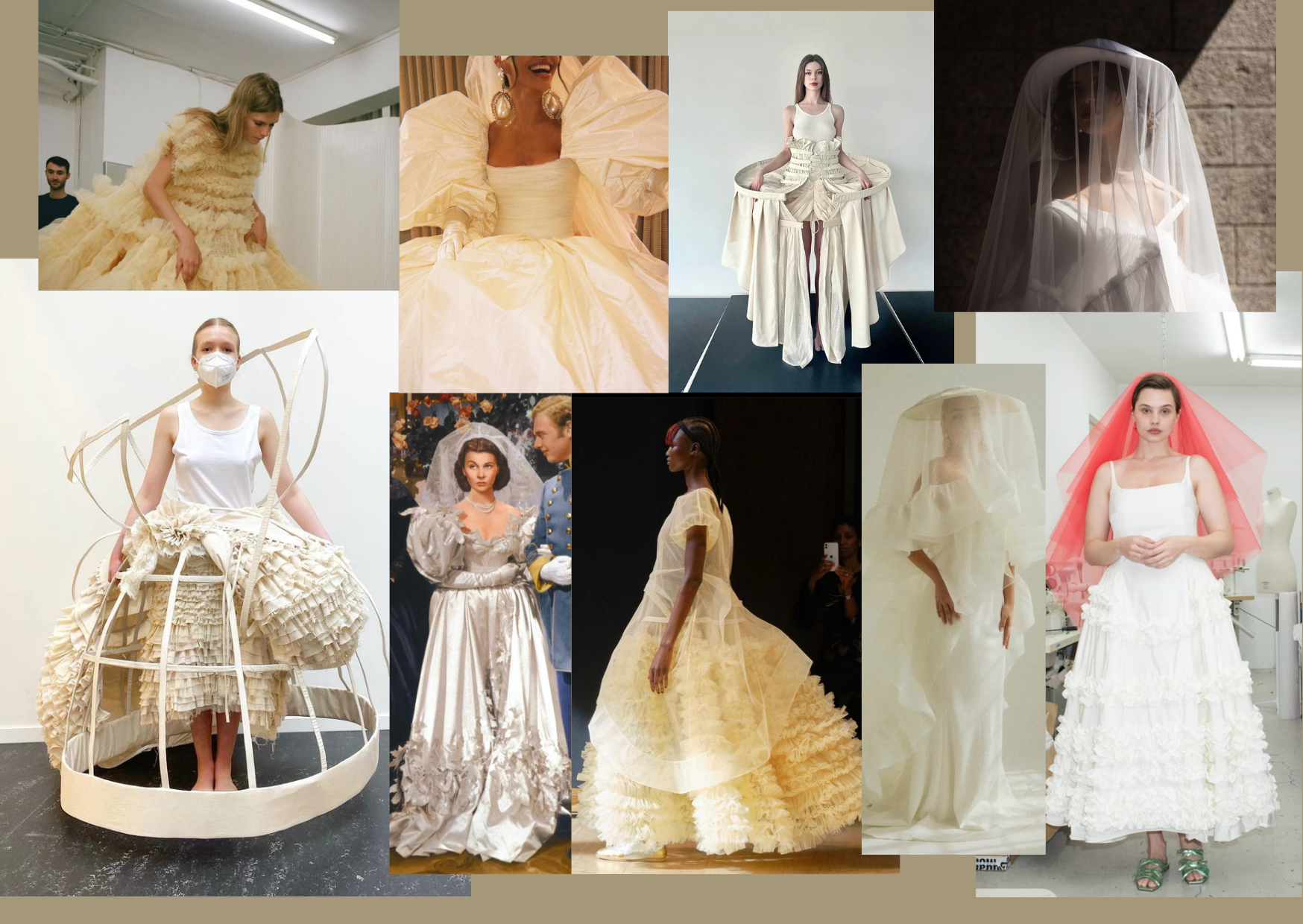
This was the original mood board for the Democracy wedding dress. Here is a link to the entire Pinterest board for the credits.
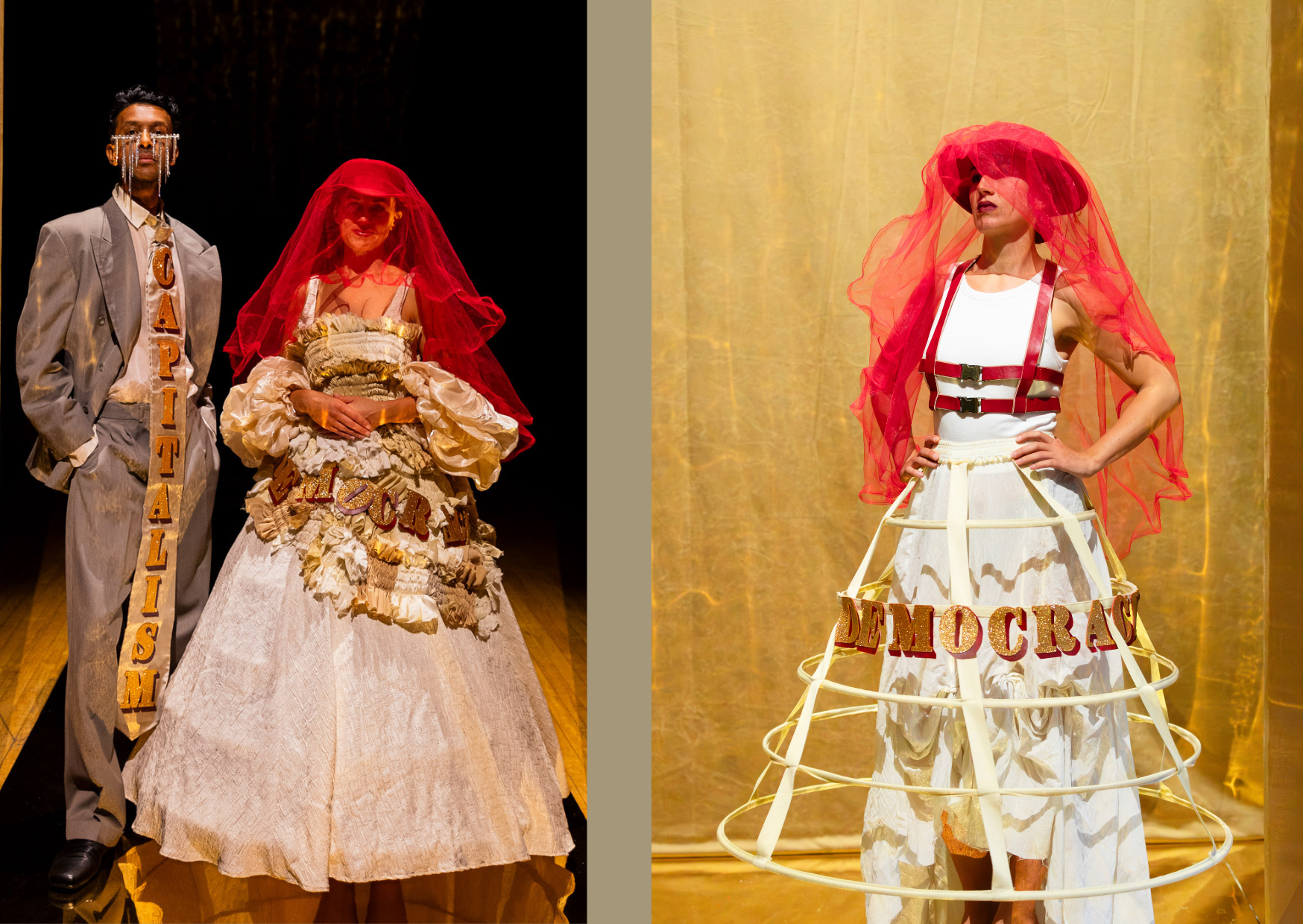
This was how the final looks came together, with the crinoline, cream ruffles, and red veil over a hat carried through
Top Tip 6: Work on one costume at a time
We had 40 costumes to design and make for this show. That felt really overwhelming at the start, so I decided to just focus on one look at a time and build them up bit by bit. I started with the bigger costumes like Profit and Debt, then worked my way through to the simpler looks.
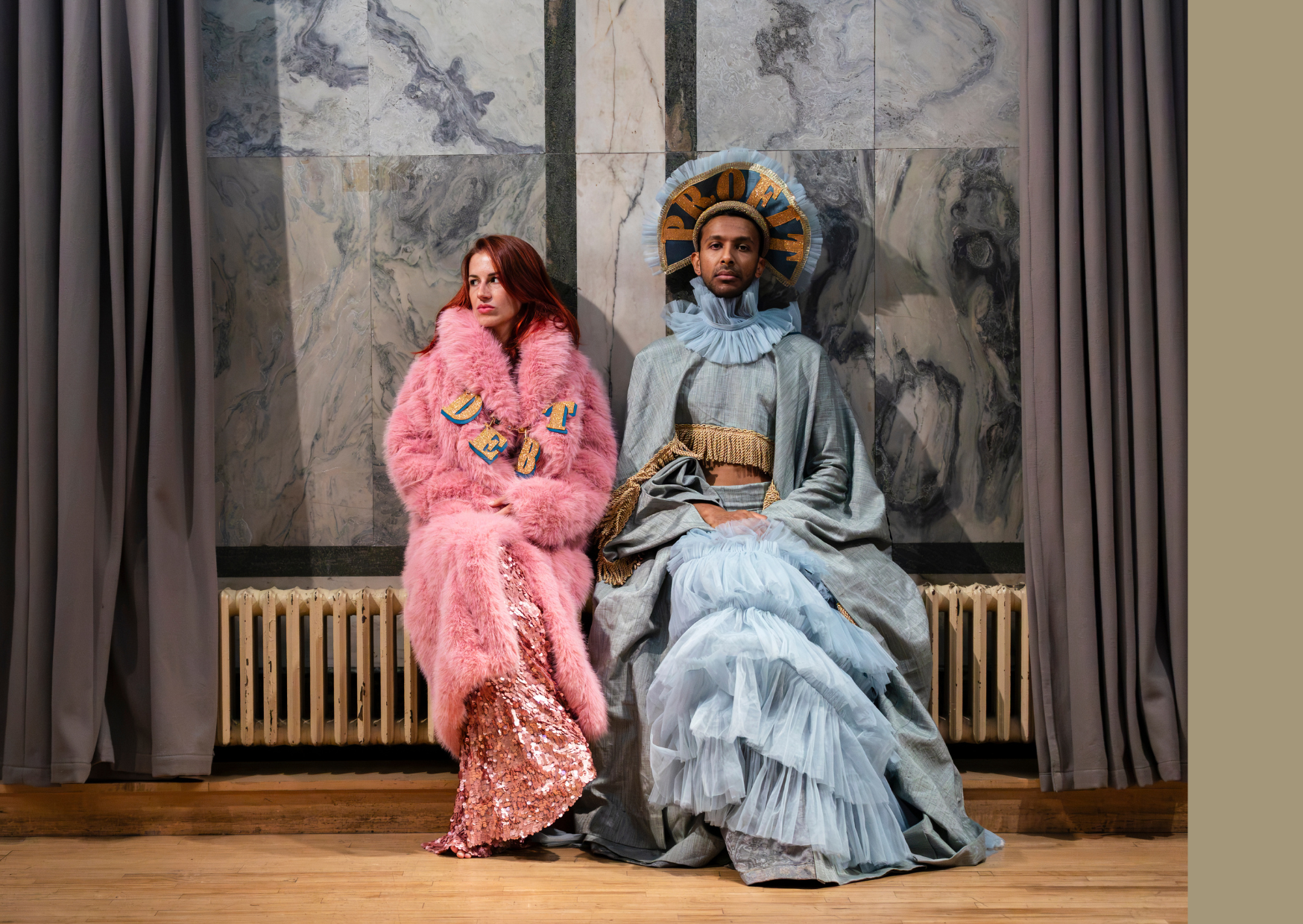
Debt and Profit sit uncomfortably next to each other
Top Tip 7: Use recycled fabric where possible
This has always been a big part of my practice, especially when working with a very environmentally-focussed theatre company like ThisEgg. I always start a job by thinking about what materials I already have, rather than buying new. The silk I used for the ruffles of the Democracy wedding dress were all left over scraps which I princess pleated and then subtly painted with gold fabric paint. The leather I used for the Landlord and Renter cavemen was all sourced from Bristol Scrapstore, which is a local recycling organisation that stops materials going to landfill. Working this way is so much more satisfying than just buying loads of new stuff.
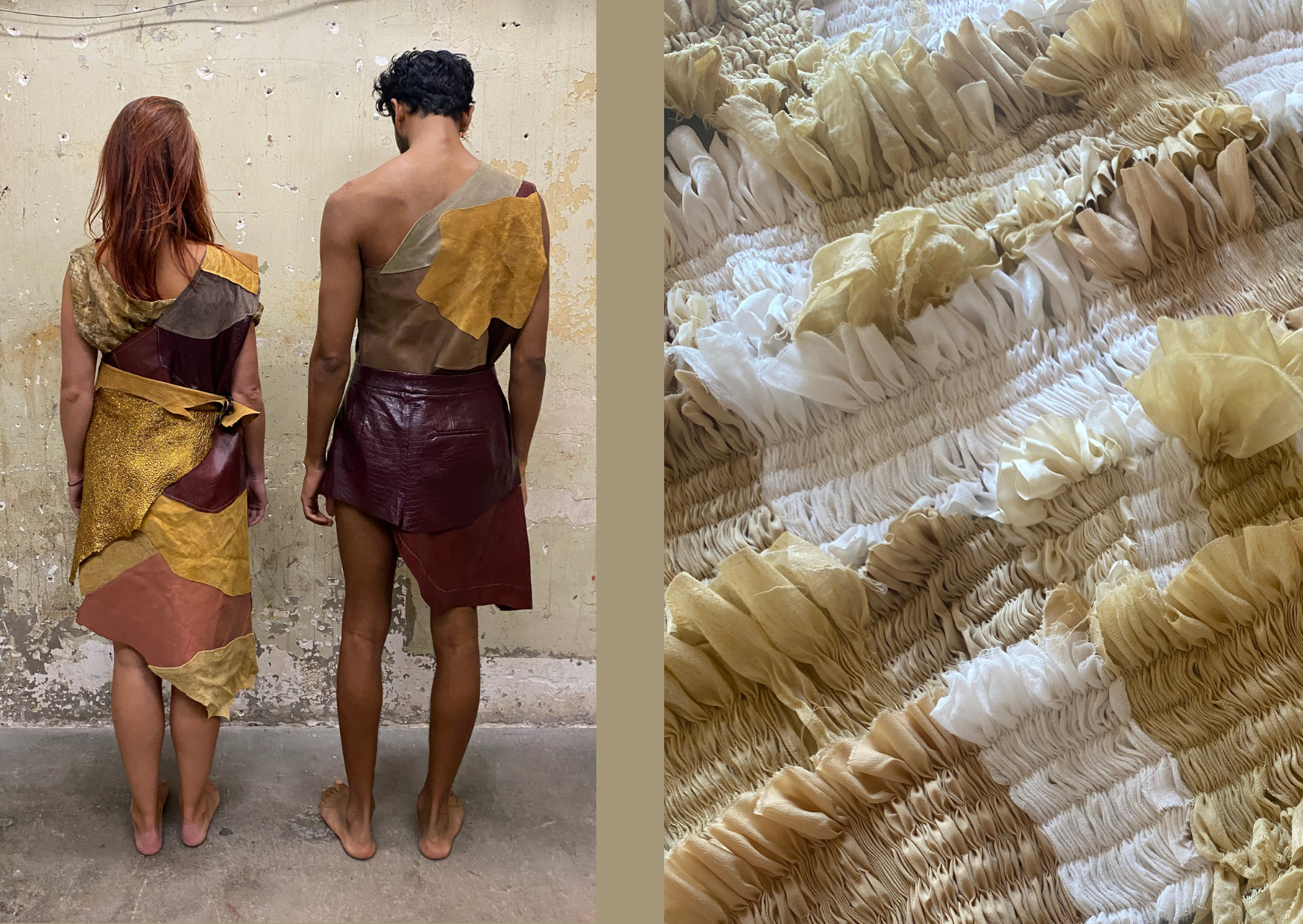
The Landlord and Renter caveman costumes made from recycled leather
Top Tip 8: Think about how the performers will get in and out of the costumes for quick changes
The two performers have very limited time to change into each new costume backstage, so I put in quick release buckles that they can use to just clip in and out of garments. Dresses with an element of stretch to them were also a winner because they can just be pulled on. We also utilised capes a lot, because the next costume can be hiding underneath and ready to go.
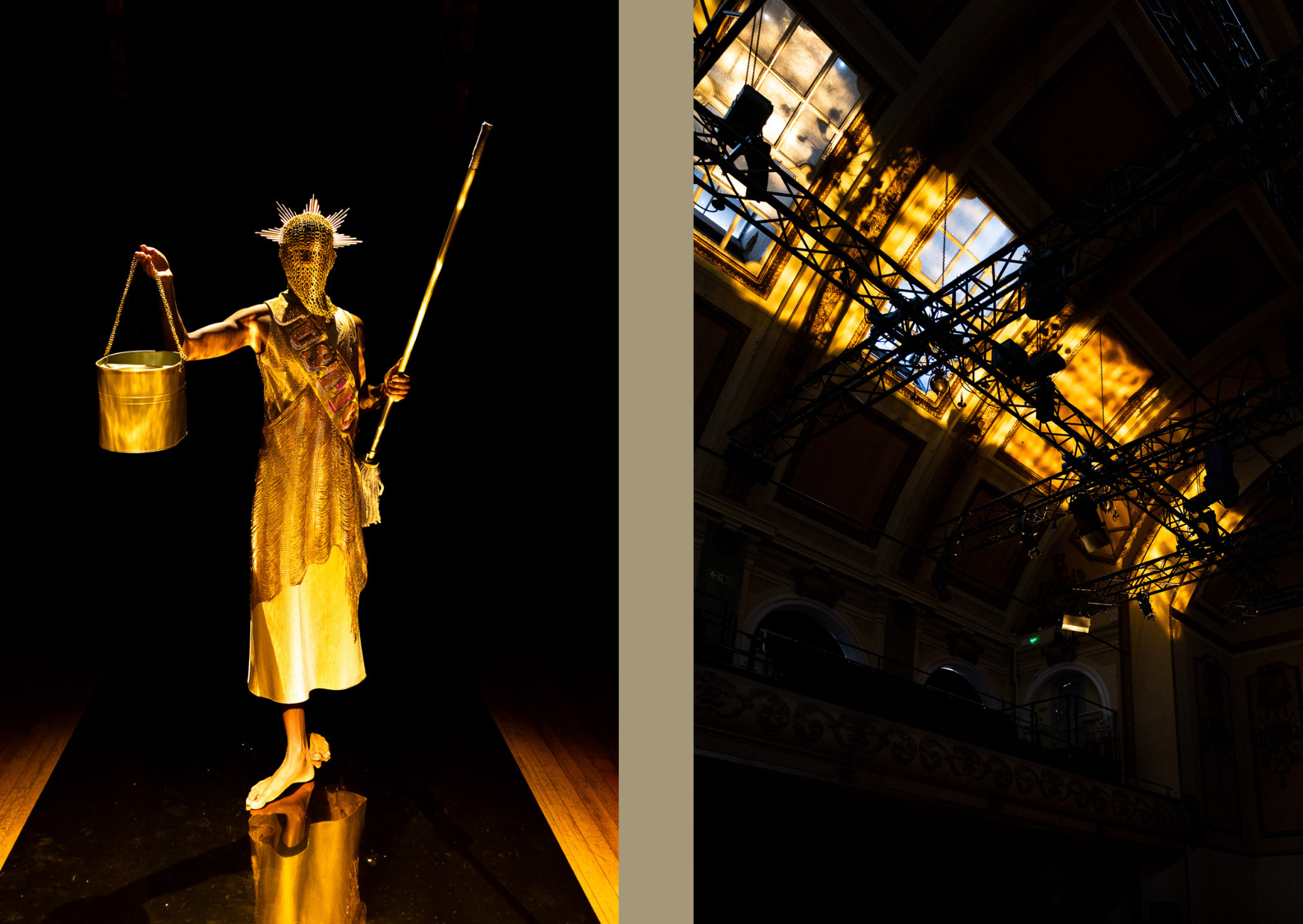
This Lady Justice costume is one of the hardest to get in and out of as it has so many elements, but there will be a dresser backstage to help
Top Tip 9: Don’t get sad when a costume you’ve spent time on gets cut
During the final rehearsal week, four scenes were cut from the show for dramaturgy and pacing - which meant four costumes we had spent a lot of time on were cut. This can feel a bit brutal, but ultimately the show will be better for it. The team are all working towards the same goal: editing down everything that has been created in rehearsal to create the best performance possible. (I really believe any piece of theatre shouldn’t be more than an hour and a half long - nudge nudge, Shakespeare).
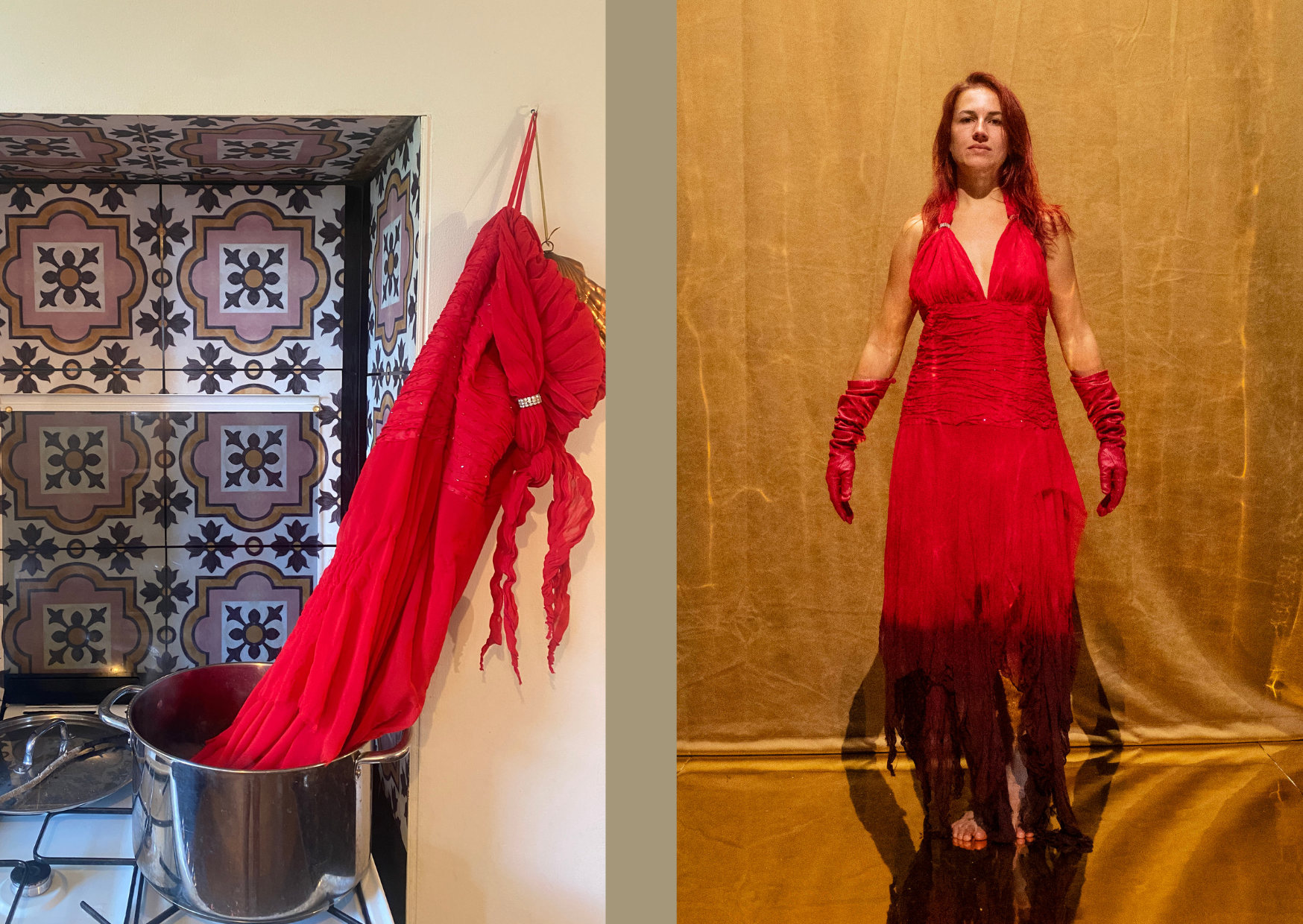
This Love dress that was shredded and dip-dyed to look worn has been cut from the show, but we’ll keep it in mind for Halloween!
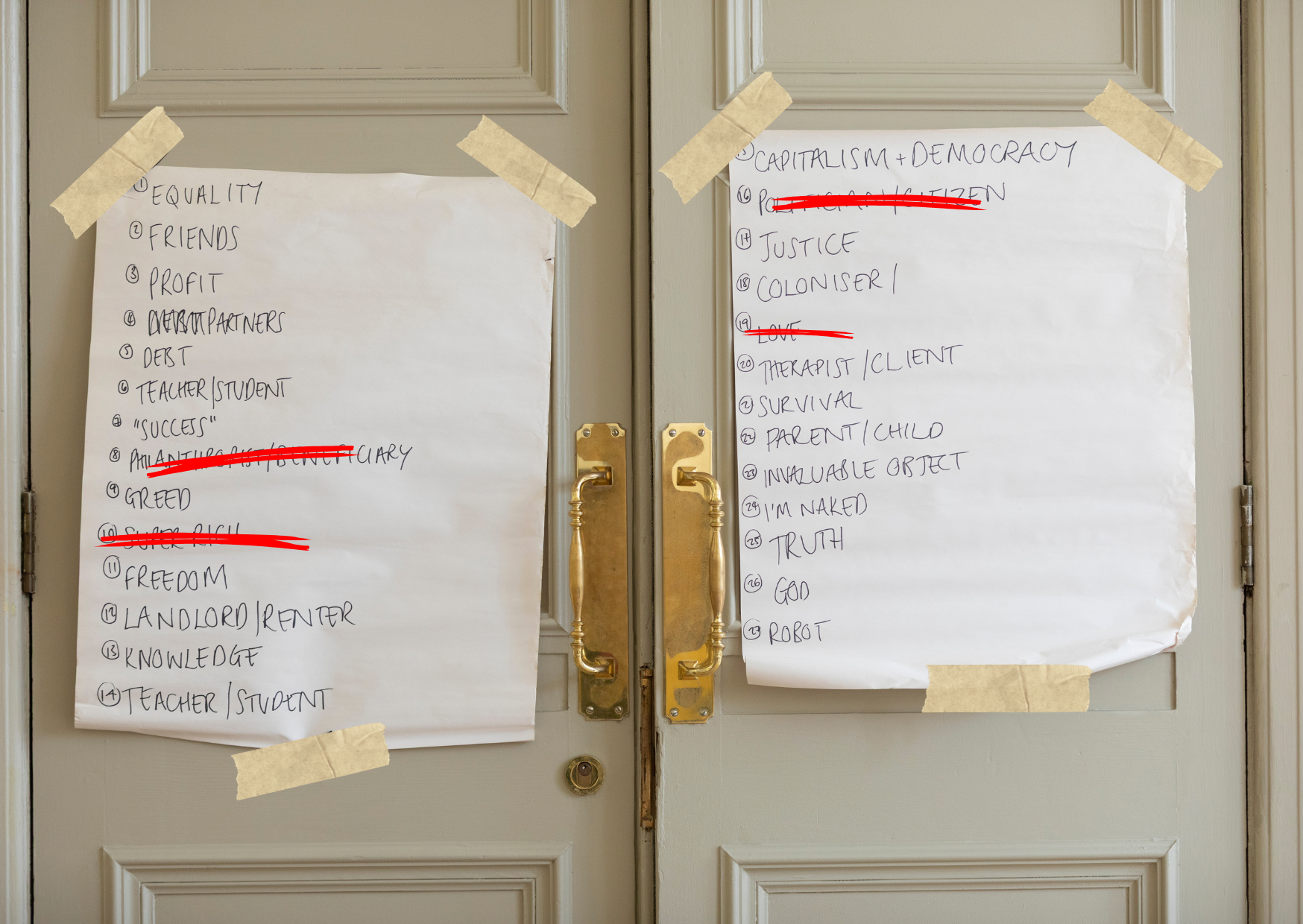
The running order having edits made to it backstage
Top Tip 10: Have fun with it!
At the end of the day you are being paid to play dress up. Don’t lose touch of the child in you who loved to wear silly hats and your mother’s high heels.
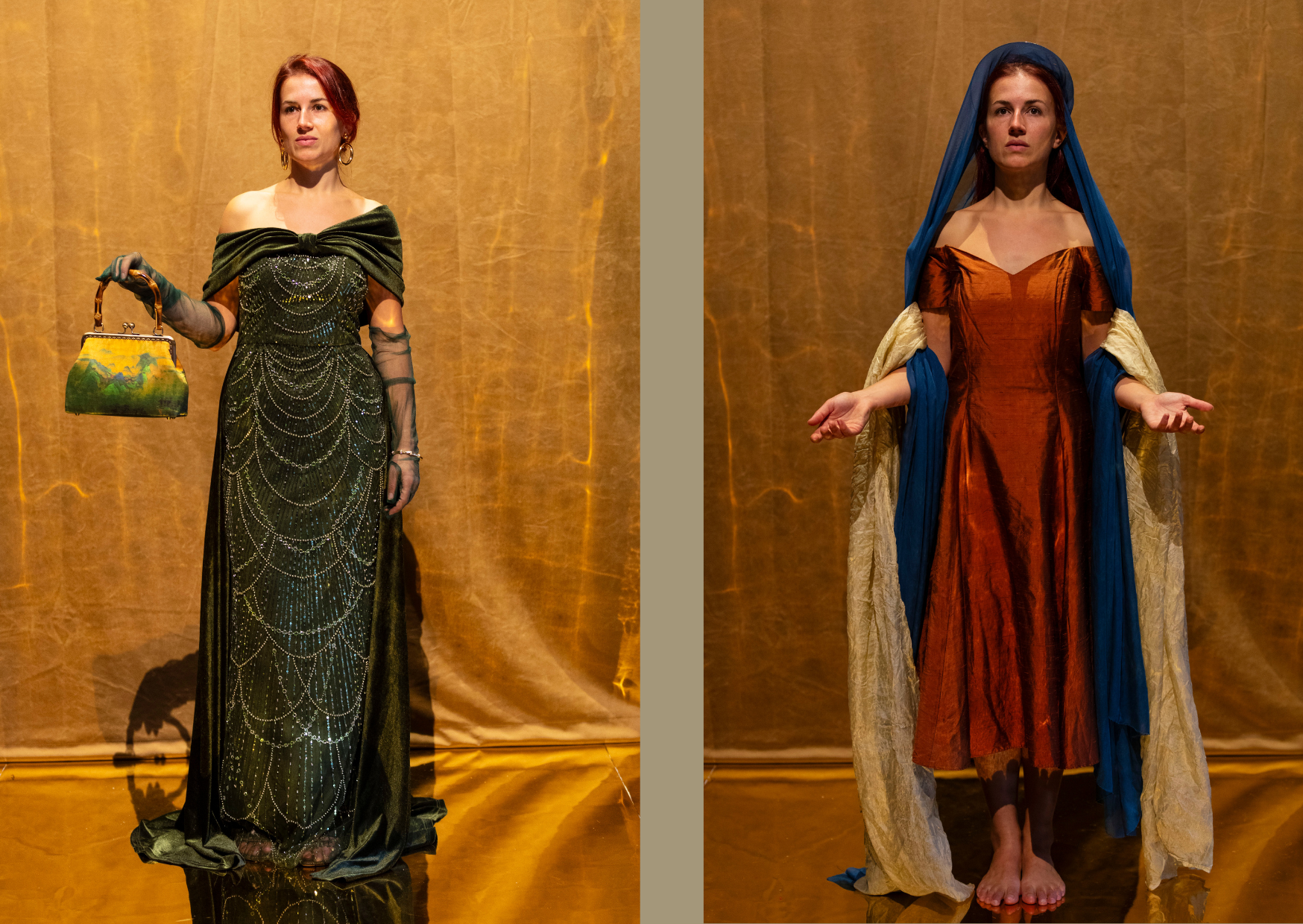
The Coloniser and The Parent
If you would like to come and see the show, UNFORTUNATELY will be performed as Shoreditch Town Hall Tuesday 22nd - Saturday 26th September 2026
Theatre Company: ThisEgg
Performers: Josie Dale-Jones and Ragevan Vasan
Producer: Josie Dale-Jones
Associate Producer: Dan Kok
Costumes by: Lydia Higginson & Londiwe Ncube
Banners by: Lydia Higginson & Ana Clark
Lighting Design: Han Sayles
Set Design: Stefanie Müller
Sound Design: Carmel Smickersgill
Dresser: Marilena Angelides
BSL Interpreter: Sumayya Si-Tayeb
Audio Description: TBC
Wellbeing Support: The Artist Wellbeing Company, Tricia Gannon
Photography by: Jemima Yong
Trailer by: Chewboy Productions
With thanks to: Debt Justice, Annabelle Williams, The Money Charity, and Jaskiran Mangat (Financial Behaviour Specialist & Founder of Finance Therapy)