Can I run a creative business in today's world without Instagram?
I’ve been thinking a lot recently about patterns and habits, and how the little decisions we make build the life we live. I’m kind of embarrassed to admit that, last year, I identified I had an addiction to my phone. Which isn’t a ground-breaking admission: we all say we’re addicted to our phones. But at some point in the autumn/winter of last year, I really sat down with myself and reckoned with how much time I was spending looking at that little screen - more specifically, how much time I spent scrolling Instagram and at what times in the day.
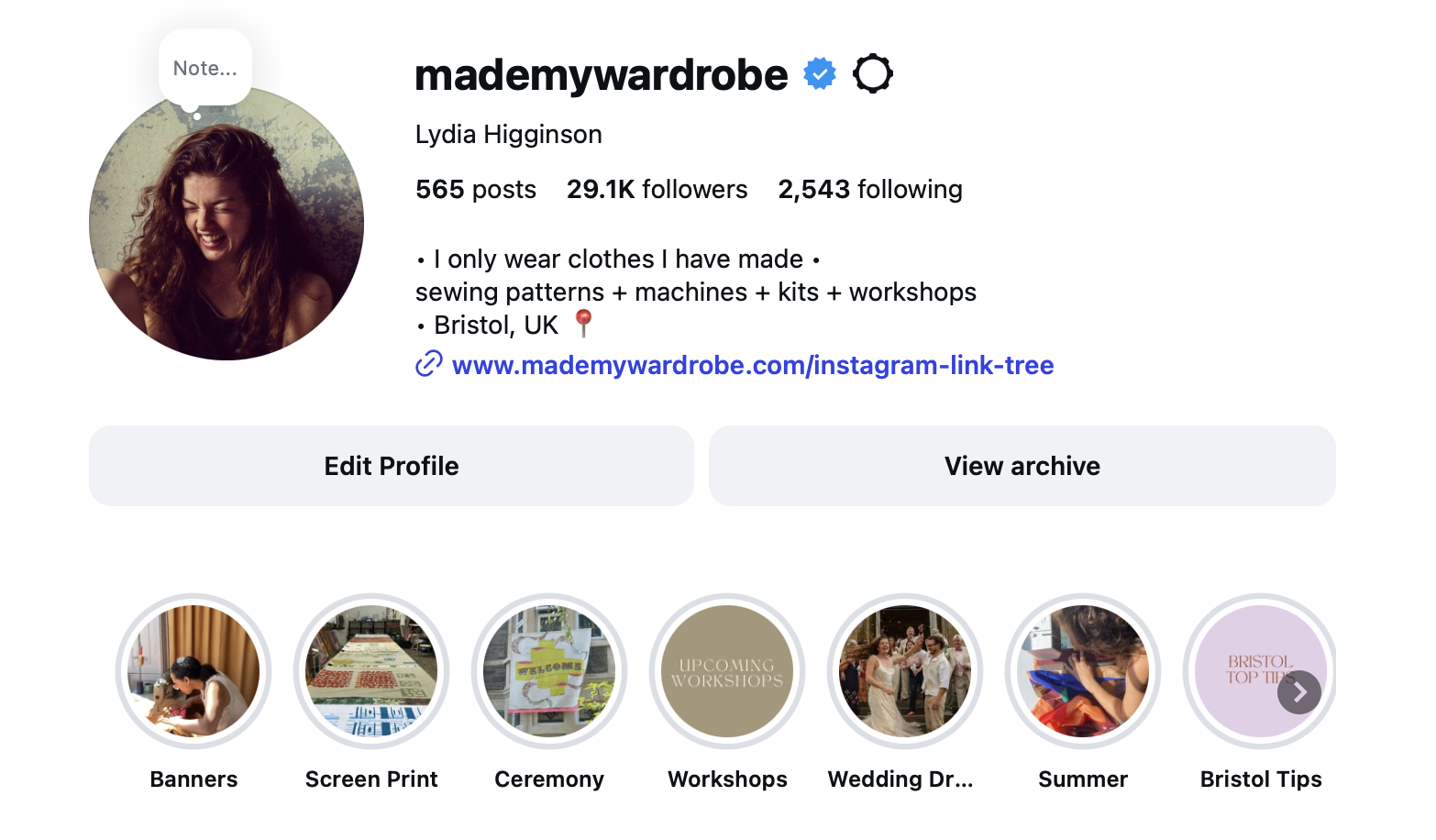
It’s no wonder I was addicted to the ‘gram. I’m a poster child for how you can use it as a tool to build a business. I started the @mademywardrobe account on Instagram in 2016 to document my personal challenge: to make my own wardrobe from scratch. And from those first oversaturated photos, step-by-step I’ve built a business. From sewing patterns, to fabric and kits, to sewing machines and workshops, Made My Wardrobe has grown. My Instagram has been inextricably linked to my income and the sales of my business. In the Instagram heyday (peak lockdown), a single post could lead to thousands of pounds in sales and I’m not even that big on there. More recently our account’s growth has plateaued at just under 30k followers and I’m kinda happy about that. (I’ve been told that as soon as you tip over 30k you start getting trolled, and up until this point I’ve been relatively lucky on the trolling front). As with every other creative business I know, our reach and visibility has massively dropped off as the algorithm has changed, save for a few semi-viral posts about wedding outfit making (wedding-related stuff always bangs on there).
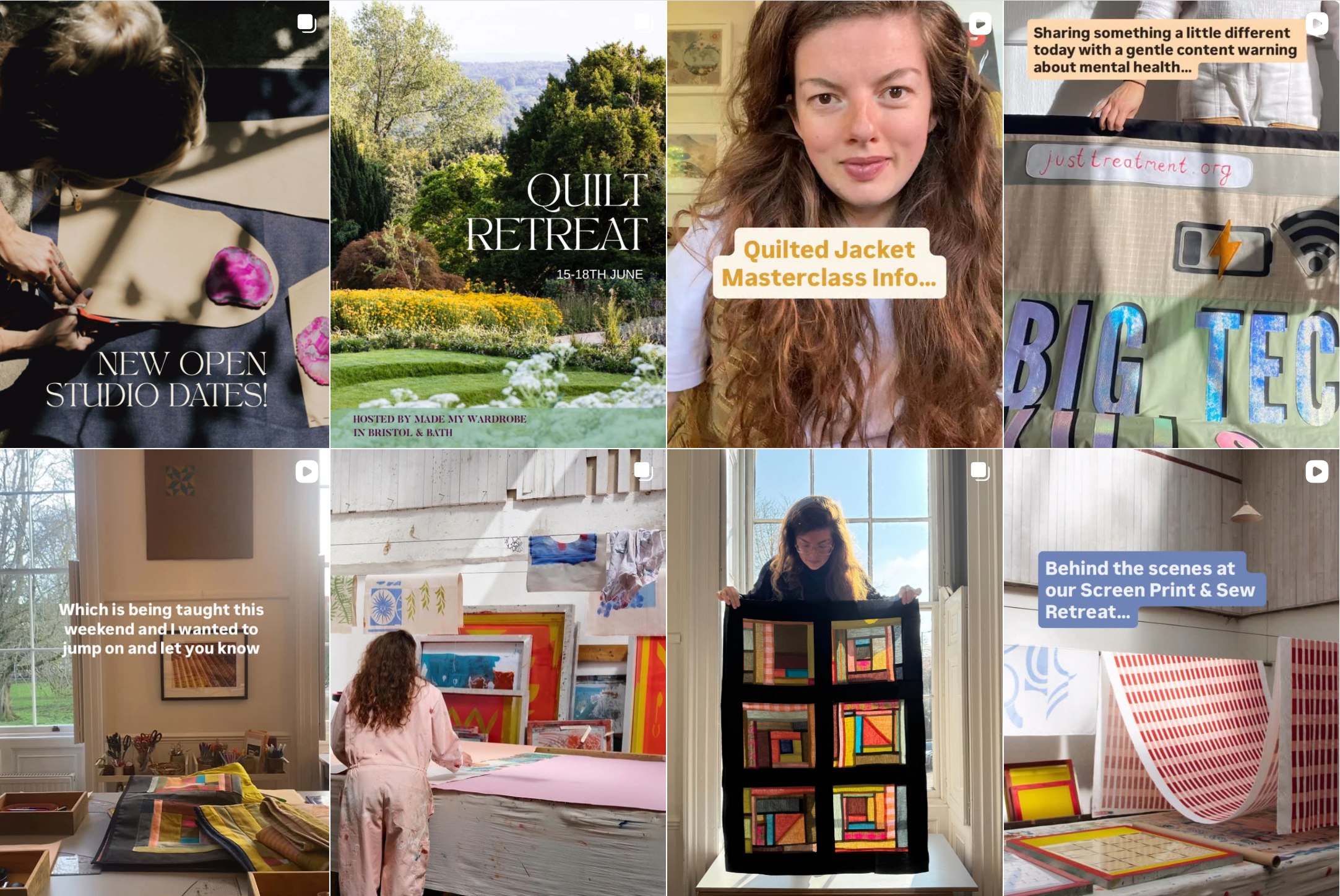
Running a small creative business does sometimes feel like a wild game of roulette. One day I’ll open my phone and see we’ve made no sales and the next I’ll see we’ve had a huge flurry. My phone is my portal to getting a dopamine hit of success, or a slap of failure when something isn’t working.
I’ve always said I’ll be on social media as long as it's a tool to lead to real life interaction and creativity. Bringing people together to create is what I’m interested in. That’s what makes my tummy tingle.
But in the last few months of 2025 it had truly gotten out of whack. I was checking my Instagram late at night in bed and early in the morning, before I had even got up to make a cup of tea. I was replying to DMs about sewing pattern queries at midnight because I was worried if I didn’t do it when I saw the message, I would forget the next day at work. But the thing that made me saddest was that I was framing the hours spent scrolling as an essential part of running a creative business. Like somehow if I wasn’t keeping in the loop in this way, I wouldn’t be able to run the business. When actually the voyeuristic infinite scrolling was draining my creativity, activating my anxiety and overstimulating my nervous system, often when I needed to be resting. We know all this. But what I didn’t know was how to fix it. I needed to get real about it - if I was spending as much time drinking as I was scrolling, I would need to be in AA.
I decided to delete the app completely off my personal phone. Now I have an old iPhone locked away at the studio, which is the only place I can access my account. This means I can’t scroll in the dentist’s waiting room, on the train or, most importantly, in bed. The only time I can now use Instagram is at work, for work. There is so much to do when I’m at the studio that I’m not doing the infinite scroll when I’m there, I’m doing a quick check of my DMs (where I’ll encourage people to email me to further their enquiry), sharing a post or two, checking out my favourite artists and then logging off.
But for this switch to work I needed a challenge. In the same way that I gave myself the challenge to make my entire wardrobe from scratch in a year, I needed a new challenge that would give me a sense of achievement and progress. So I decided 2026 would be the year I read a book a week. 52 in total. Scrolling Instagram had eclipsed my concentration and nighttime reading rituals, but it was time to flip the script and fall back in love with books. As I write, it’s the end of April and I’ve finished 18 books so far this year, so I’m on track. I now read in the times and places I used to scroll and the effect on my brain is so much more calming. Keeping a visual stack of the books has helped me feel proud of my progress. The first month I was constantly getting urges to redownload Instagram, but they say it takes 40 days to make or break habit and I can feel it’s becoming my natural instinct now to reach for a book, instead of my phone.
If you want to try this I recommend sticking to books that are roughly 300 pages long so that you can keep up momentum. Alternate between fiction and non-fiction as sometimes it’s hard to jump straight from one fictional world to another.
My soul feels nourished by the switch and my brain feels like it's gained some of the function and capacity it had lost through scrolling, but how has being on Instagram less affected my business?
Historically Instagram has been an essential part of running a creative business, and I’ll be honest, sales have been slightly slower this year. Last year we sold out every single workshop we put on (which is wild, and I’m very grateful for it). This year we’ve had a few that haven't totally sold out and one we had to postpone. That’s probably not just down to me spending less time on social media, there are global factors at play surrounding people’s spending. And using slower forms of advertising to announce workshops just didn’t leave enough lead time for them to completely fill up.
I’ve been keeping an eye on the data at the back end of our website, so that I can see how our customers find us, and I thought I would share the stark difference between 2020 and 2026.
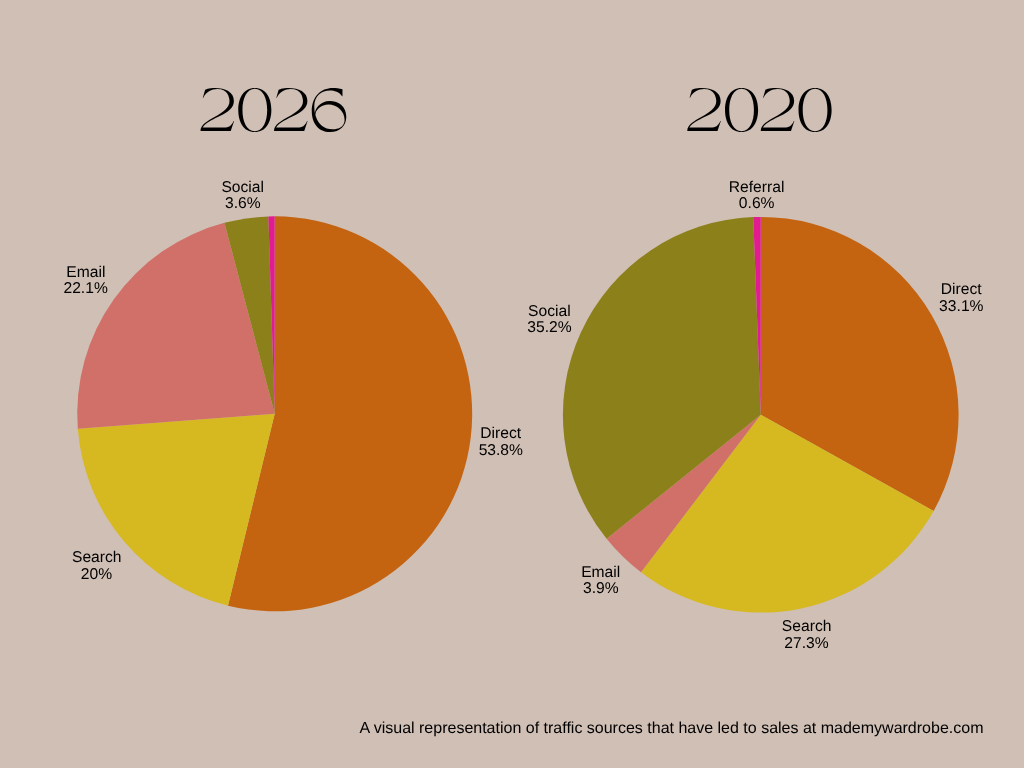
Back in 2020, over a third of people who were buying something from us were coming through Instagram. This year it’s been just 3.6%. Whereas in 2020 just 3.9% of our sales were coming from our mailing list subscribers, this year that is up to 22.1%. More people are also coming to mademywardrobe.com by typing the address in directly, which is great because it means they know about us and are probably returning customers, or they have been recommended to us via word of mouth (the holy grail of all marketing). But with both our social and search engine portions of the pie being down, that means we are finding fewer new customers, which probably isn’t ideal long term.
So then I guess I have a choice. Can I afford to absorb the slightly slower sales in return for curing an addiction? Maybe it’s OK if a workshop takes two months to sell out instead of 24 hours? Or, in order to be successful and profitable, will I always need to find more ways to show up online and connect with people? I’m still working out where I am in that paradigm. But for now, I’m so grateful to everyone who has stuck with us, signed up to our mailing list, and followed this blog, as I always love writing to you.
If you are interested in this topic you might enjoy ‘The Dying breaths of Instagram’ by Bo Wong of A Field Guide for Creatives, who I serendipitously discovered this week on Substack.
P.s. Of the books I’ve read this year, here are some of my favourites.
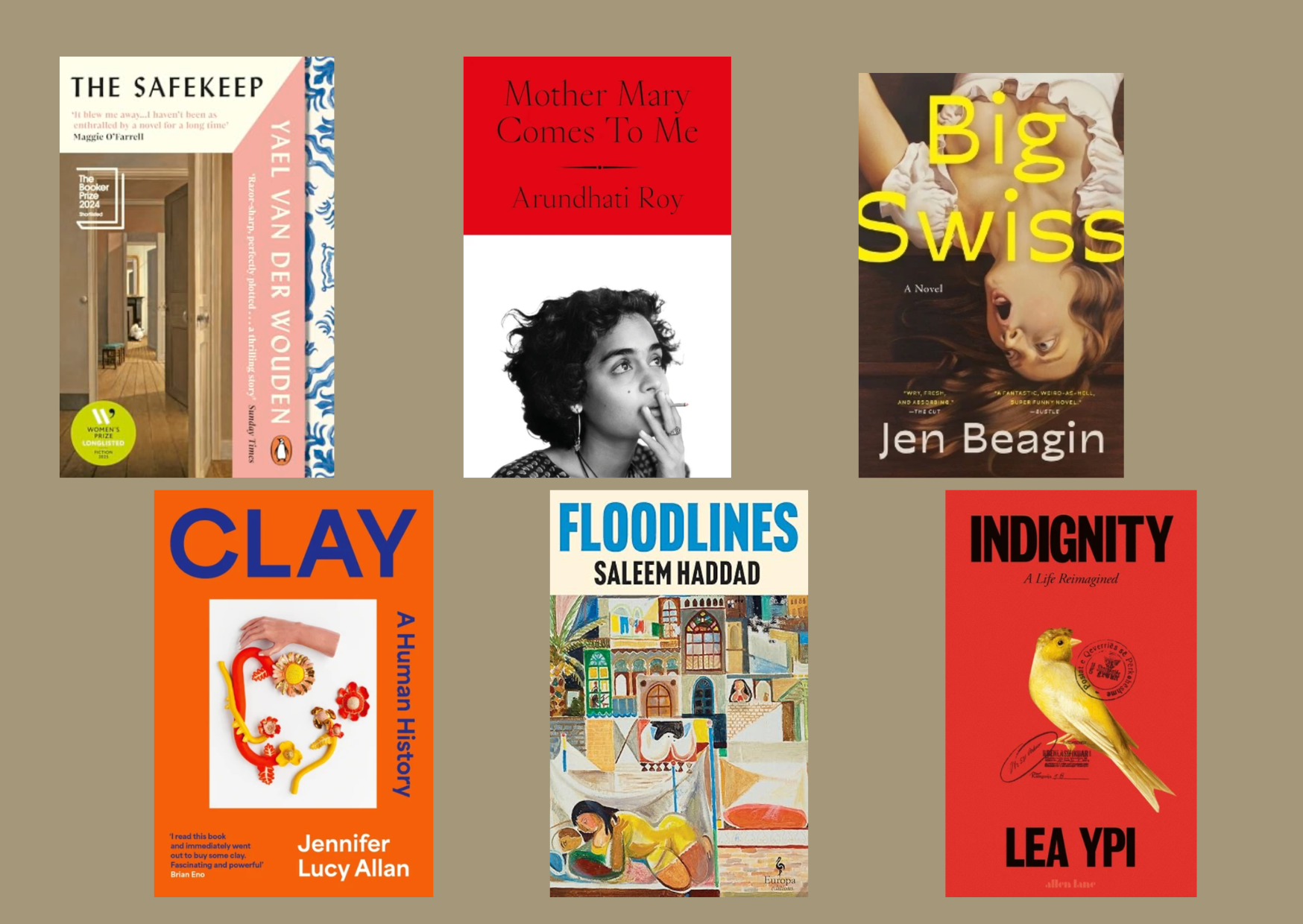
If anyone has any book recommendations please do pop them in the comments, I’ve got many more weeks of 2026 to go!