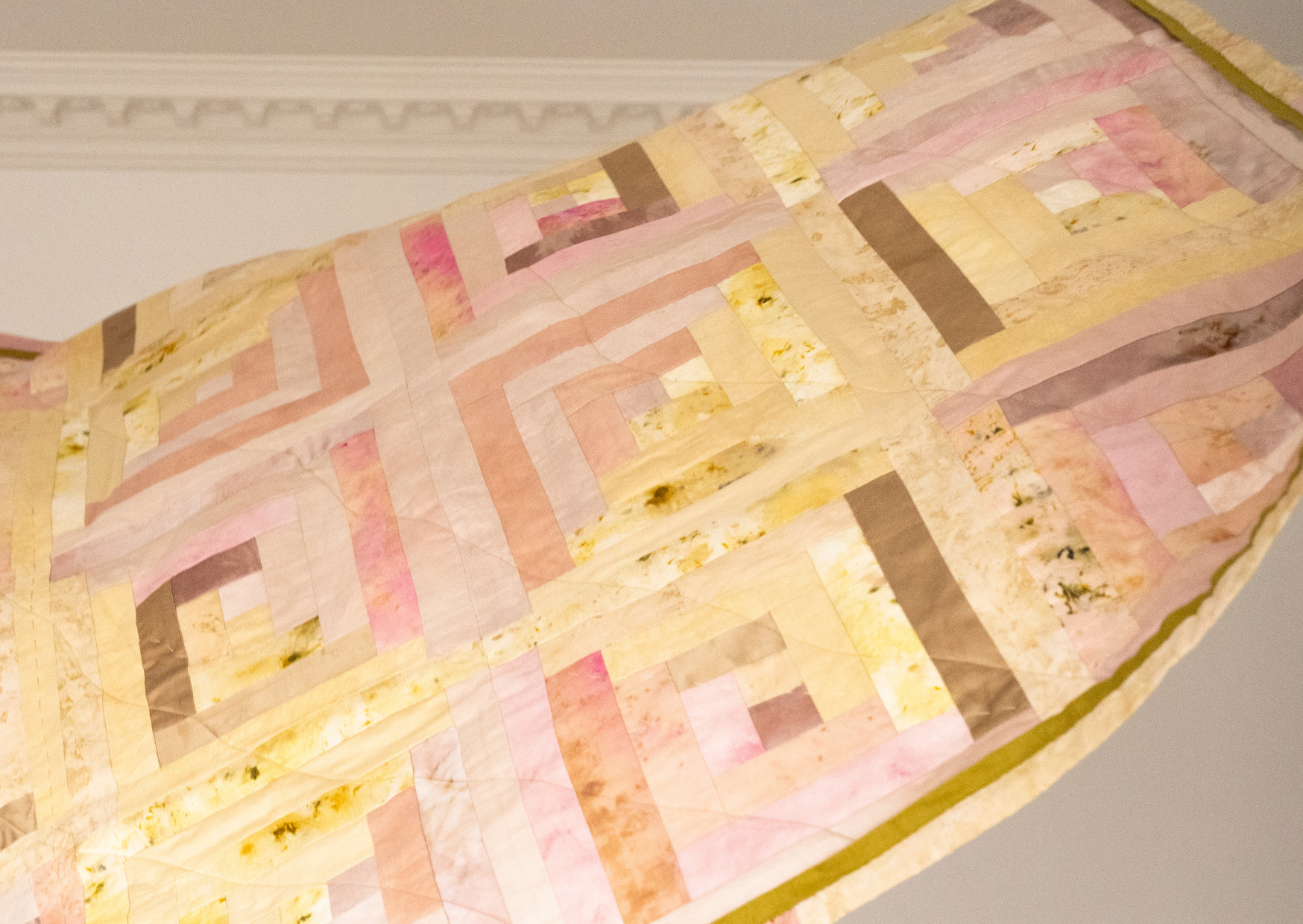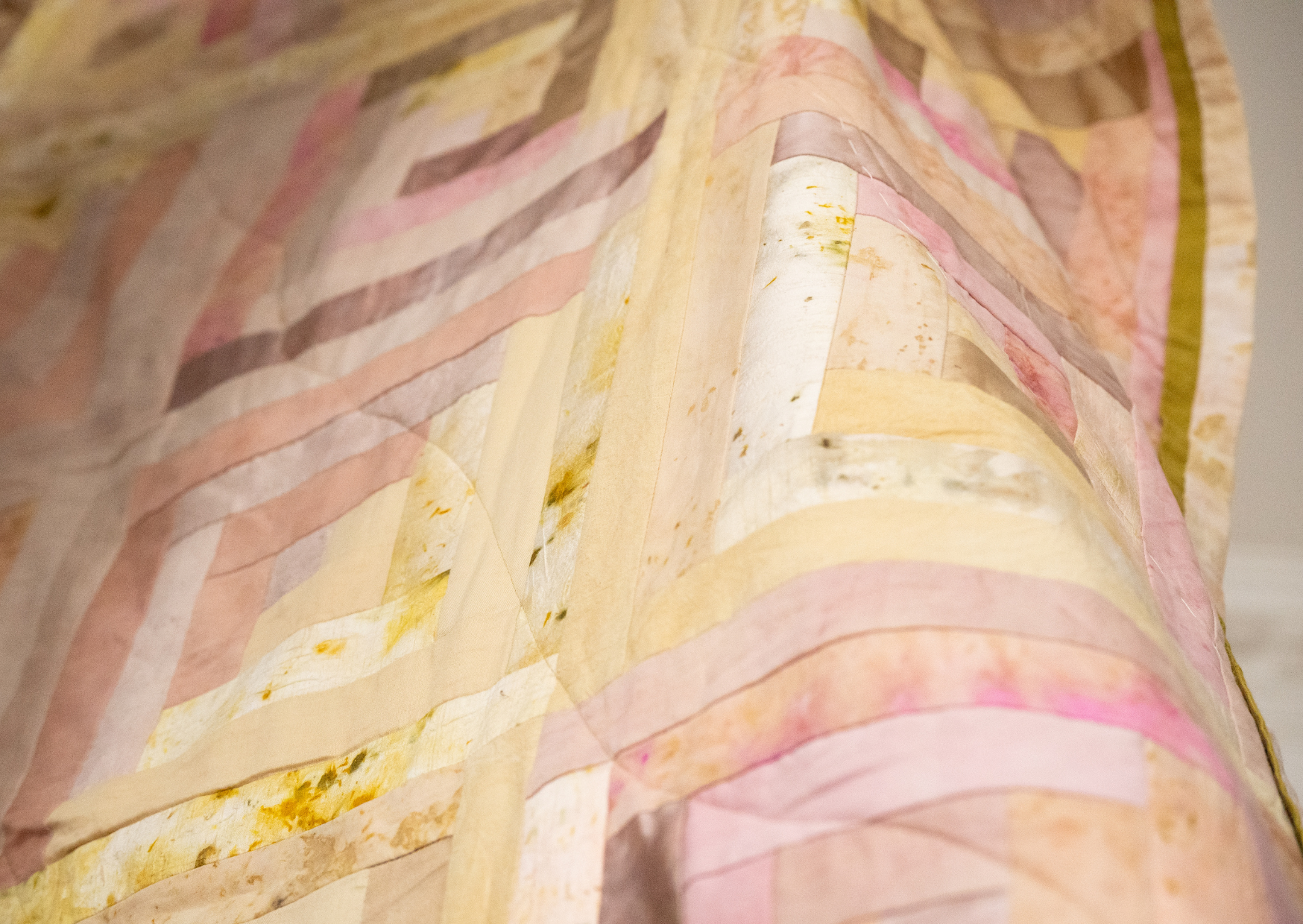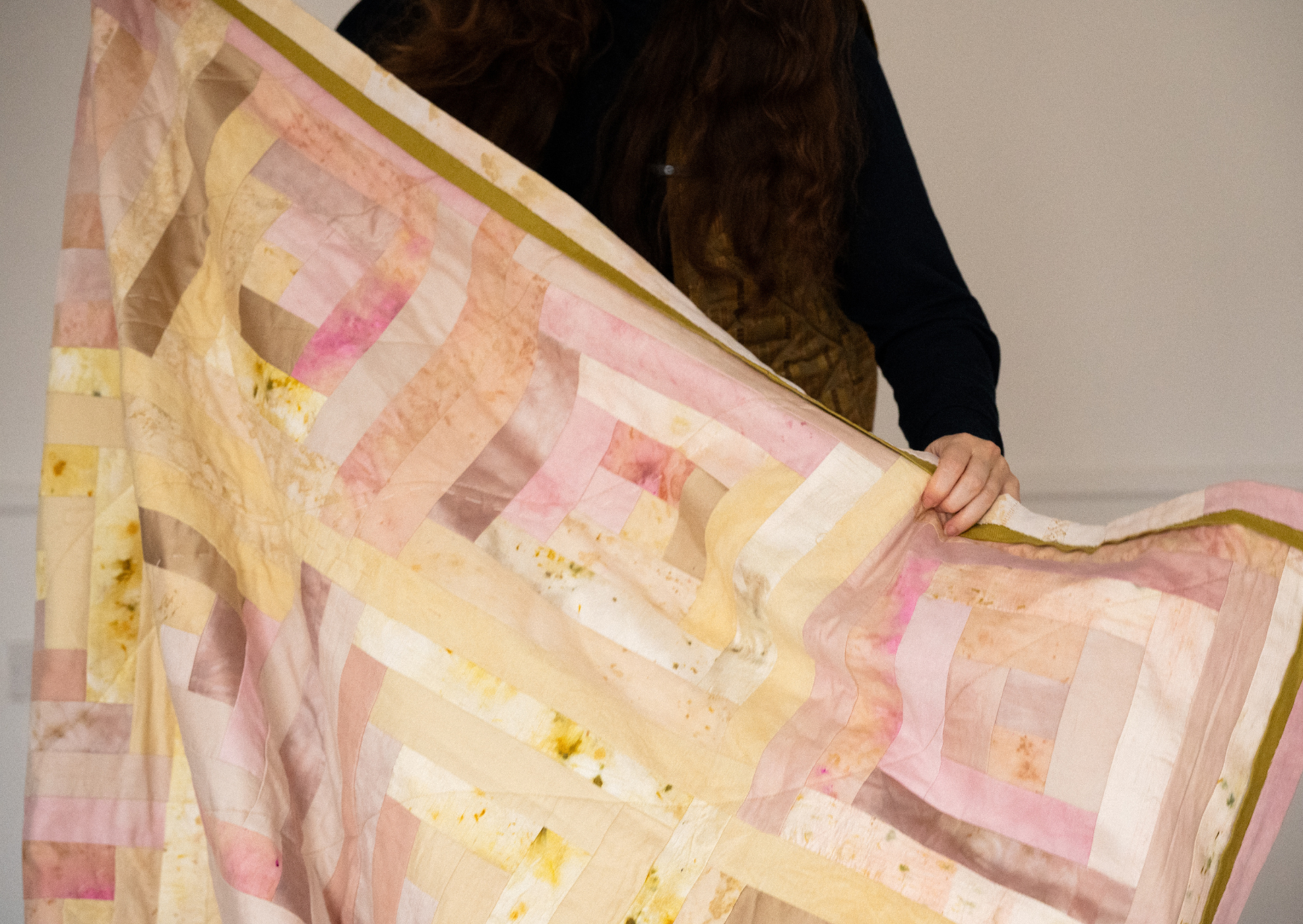
This quilt has been quietly becoming for some time. Last summer, I got married to my partner Mish. Before the ceremony, in the garden, we gathered armfuls of flower petals—each chosen not just for beauty, but for their natural dye magic. Marigolds, rose, cosmos and coreopsis petals carrying colour in their veins. When the ceremony ended, we were showered in this cosmic confetti, thrown by the people who love us most. The petals drifted down onto old family cotton sheets, carefully laid along the aisle by dear friends.
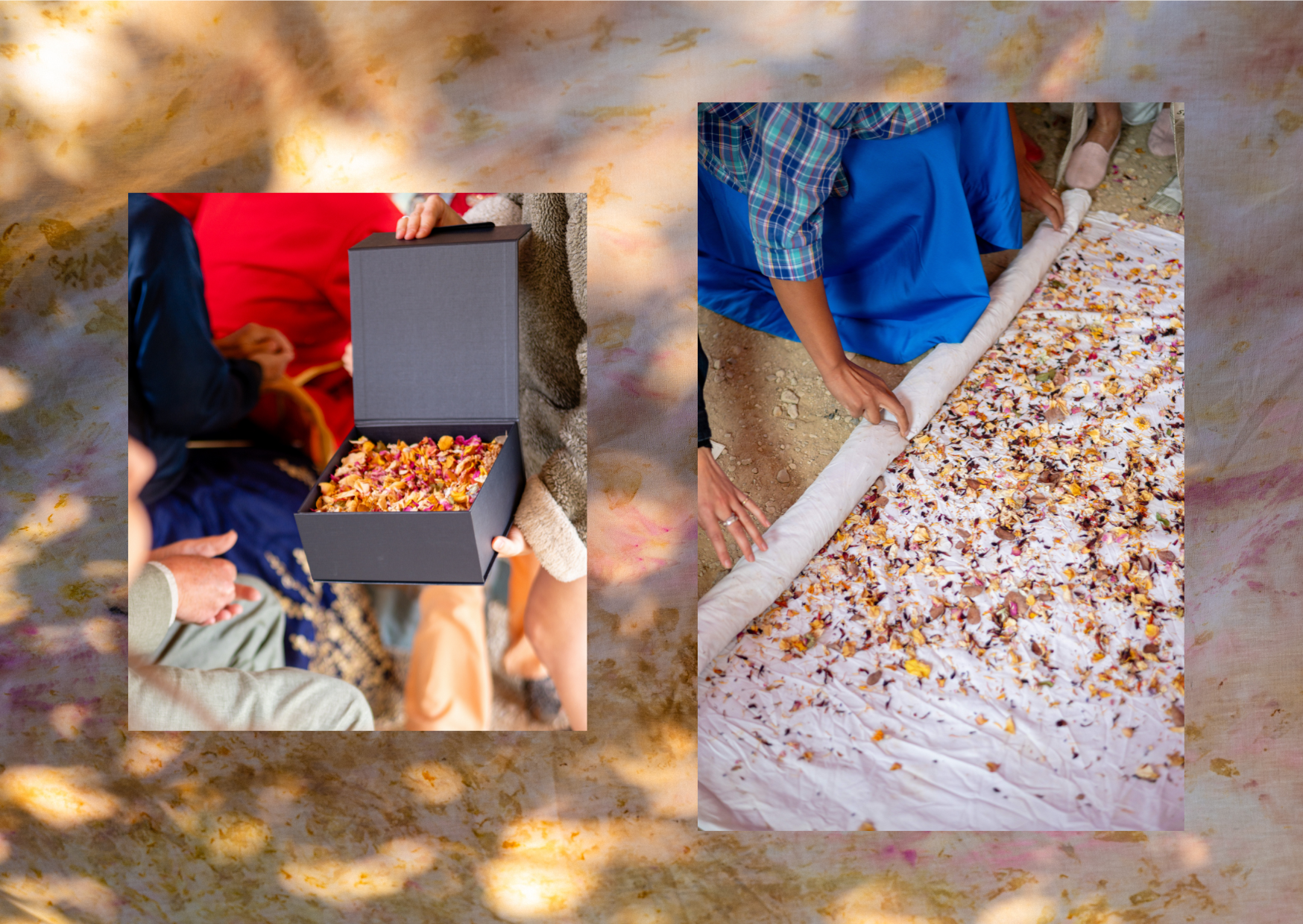
Before the wind could steal them away, those same friends gently rolled up the petal-strewn fabric, preserving that moment of matrimony. A week later, I boiled the sheets in a big pan, full of steam and witchy wishes, letting memory and colour seep into the cloth.
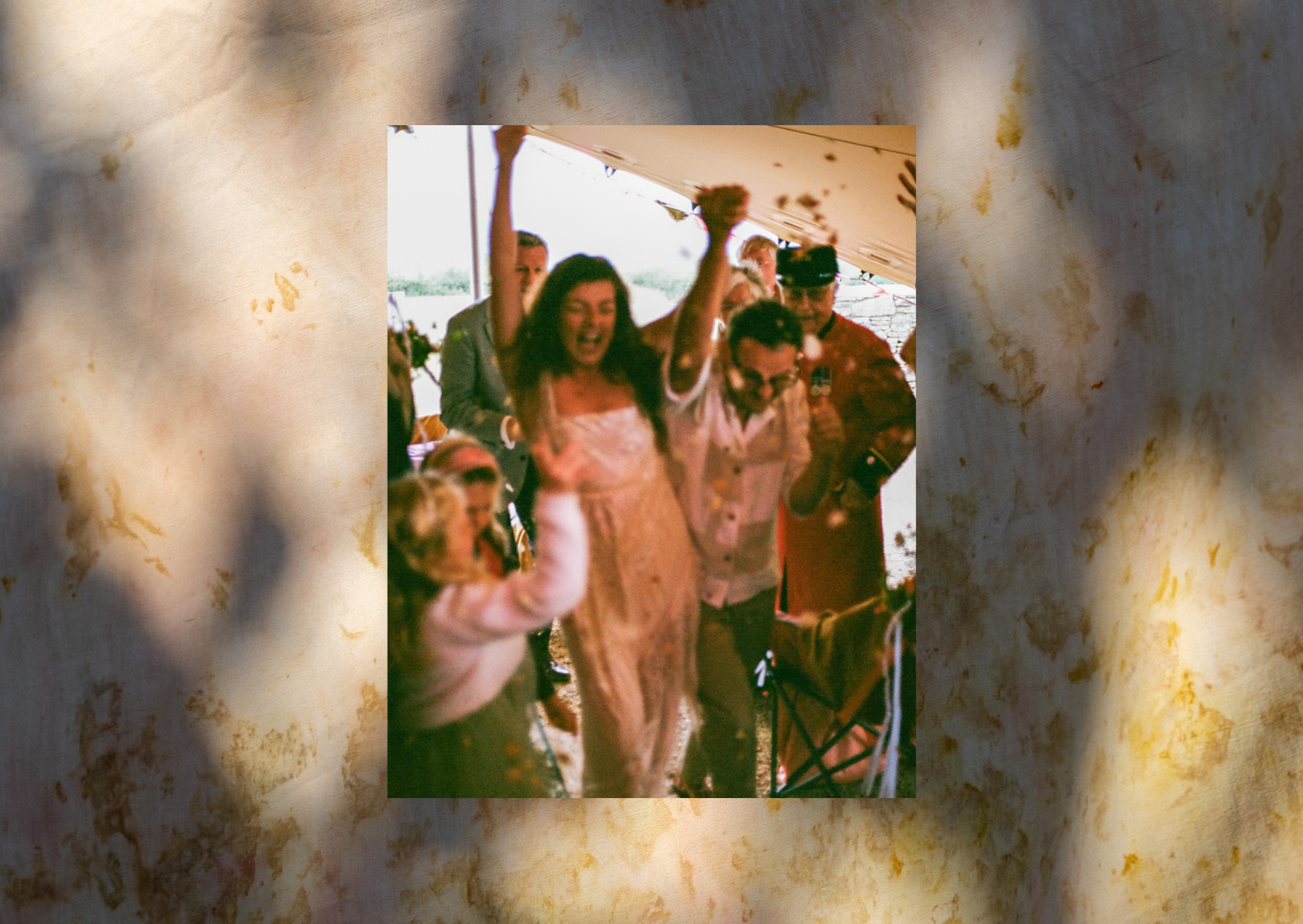
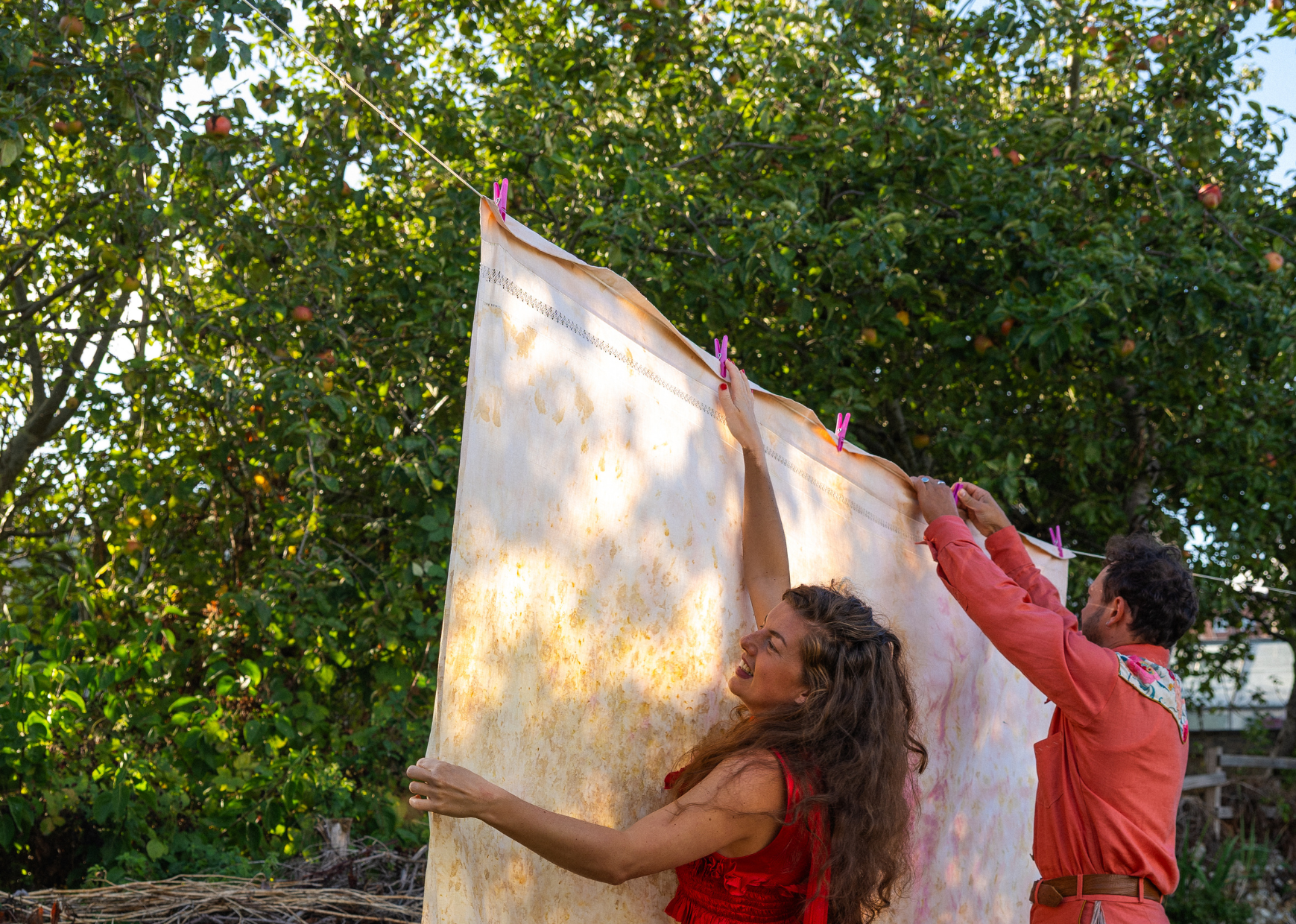
The cotton emerged freckled with ochre, yellow, and blush pink, the quiet fingerprints of old neighbours marigold and rose. The magic of that day felt held there, in the spontaneity of the stains, in the way joy refuses to be tidy. We dried the sheets on the line beneath the blazing summer sun, and then, inevitably, life hurried on. The fabric was folded away. Time slipped past.
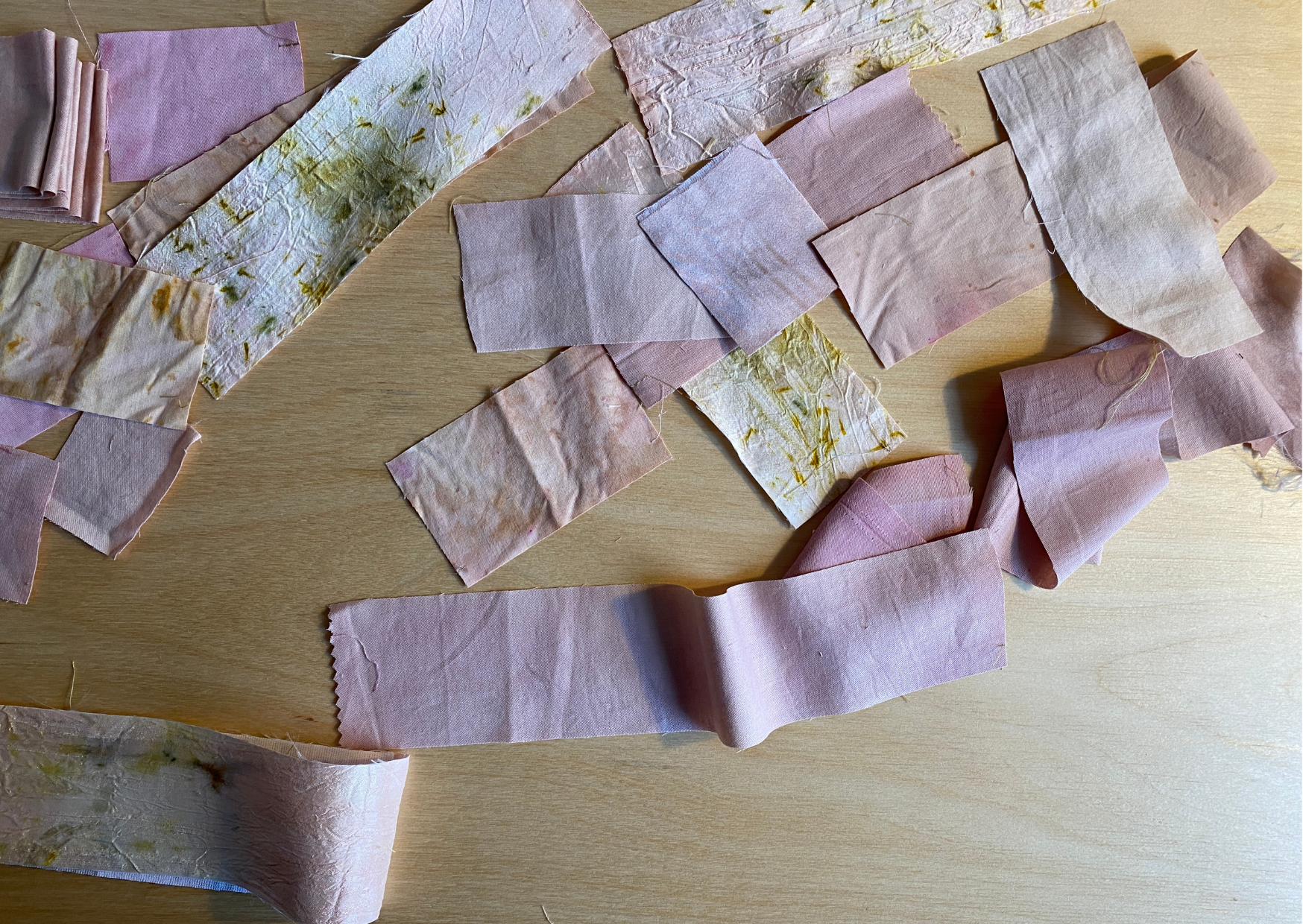
Until winter came again. Until the melancholy deepened and I wanted to hide from the world. And then, as if on cue, my dear friend Katrina Wilde, far more skilled in the art of natural dye than I am, sent me a bundle of dyed scraps from her studio in Stoke. A small, generous reminder. A nourishing nudge.
I opened the cupboard, pulled out the mottled wedding sheets, and thought: maybe now is the time. Maybe this beauty has been waiting for me, patiently, through the turning of the seasons.
Is there anything more satisfying than taking a wonky scrap, pressing it flat, and slicing through it with a rotary cutter until, you have a perfectly straight edge? Sometimes I begin here without any clear idea of what the final design will be. It’s a way in. It gets me in the mood.
Once I have a handful of uniform strips, I make a single block, just to test the feeling. Does this process want to be repeated? Enough times, at least, to become a quilt large enough for a double bed. I’ve always loved sewing log cabin blocks, but not done it at this larger scale. I needed to know how it would feel in my hands.
I can confirm: I like to this process, it feels good. The naturally dyed colours make my heart melt, and the log cabin’s repetition is soothing enough that I can slip into a kind of meditation, spiralling strips outward, turning methodically at right angles, over and over again.
I commit. I’m in. I cut more strips.
I find the flow.
I gather all my tools around me.
The tunes are on. The blocks multiply. A heavy cloud of depression begins to lift. I’m endlessly grateful for a creative practice that can shift my mood like this, simply by showing up.
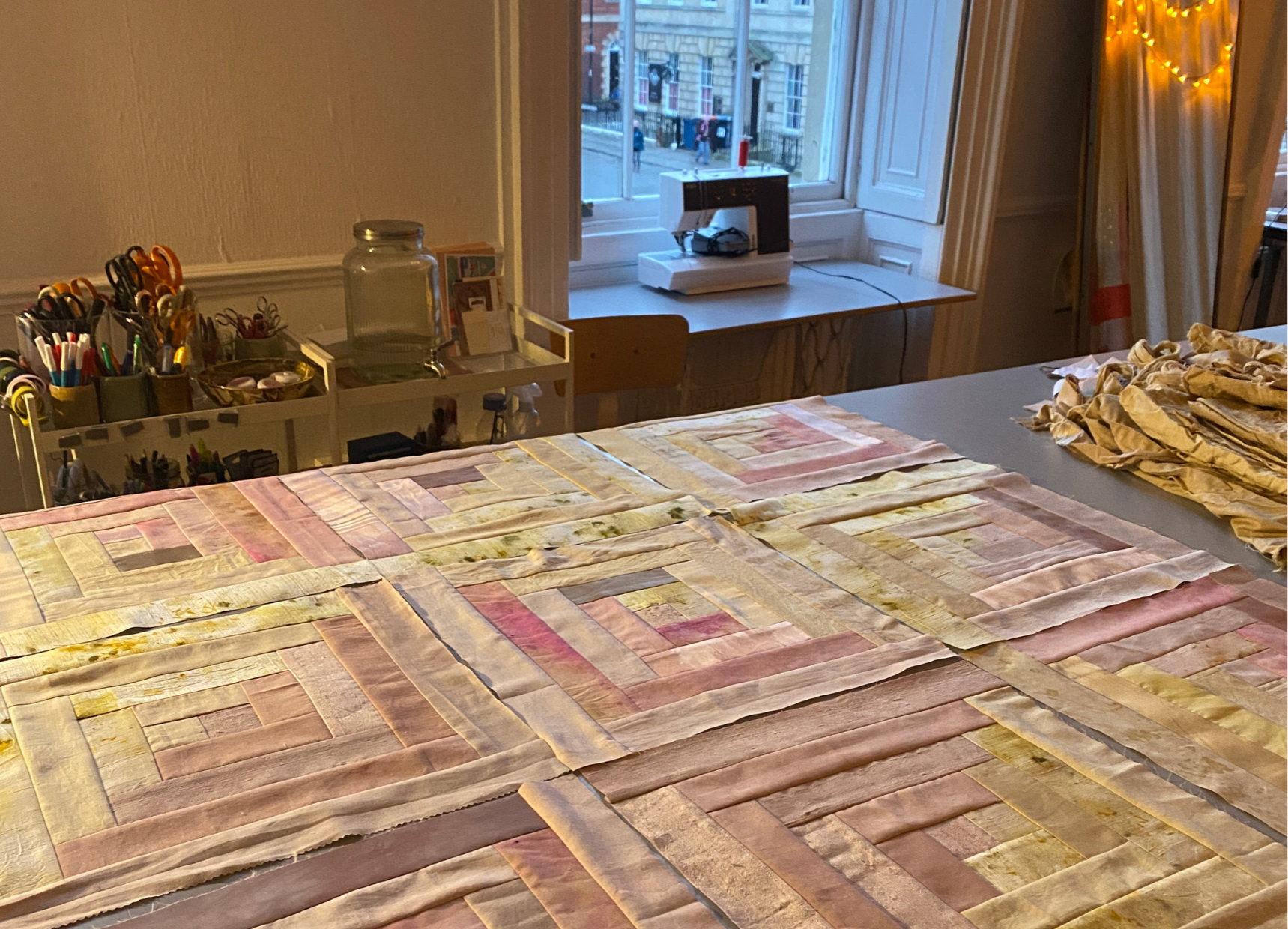
The days are short but the Christmas lights are still up to bring sparkle to the evening.
A pattern begins to emerge.
My mum pops in to help me square up the blocks, her hands so like mine, but with thirty more years of muscle memory worked into them.
Coming back the next day feels easy when you’ve made good progress the day before. The hardest part is over; now it’s about momentum. But before I dive straight back, I pause to take stock. To see where we are.
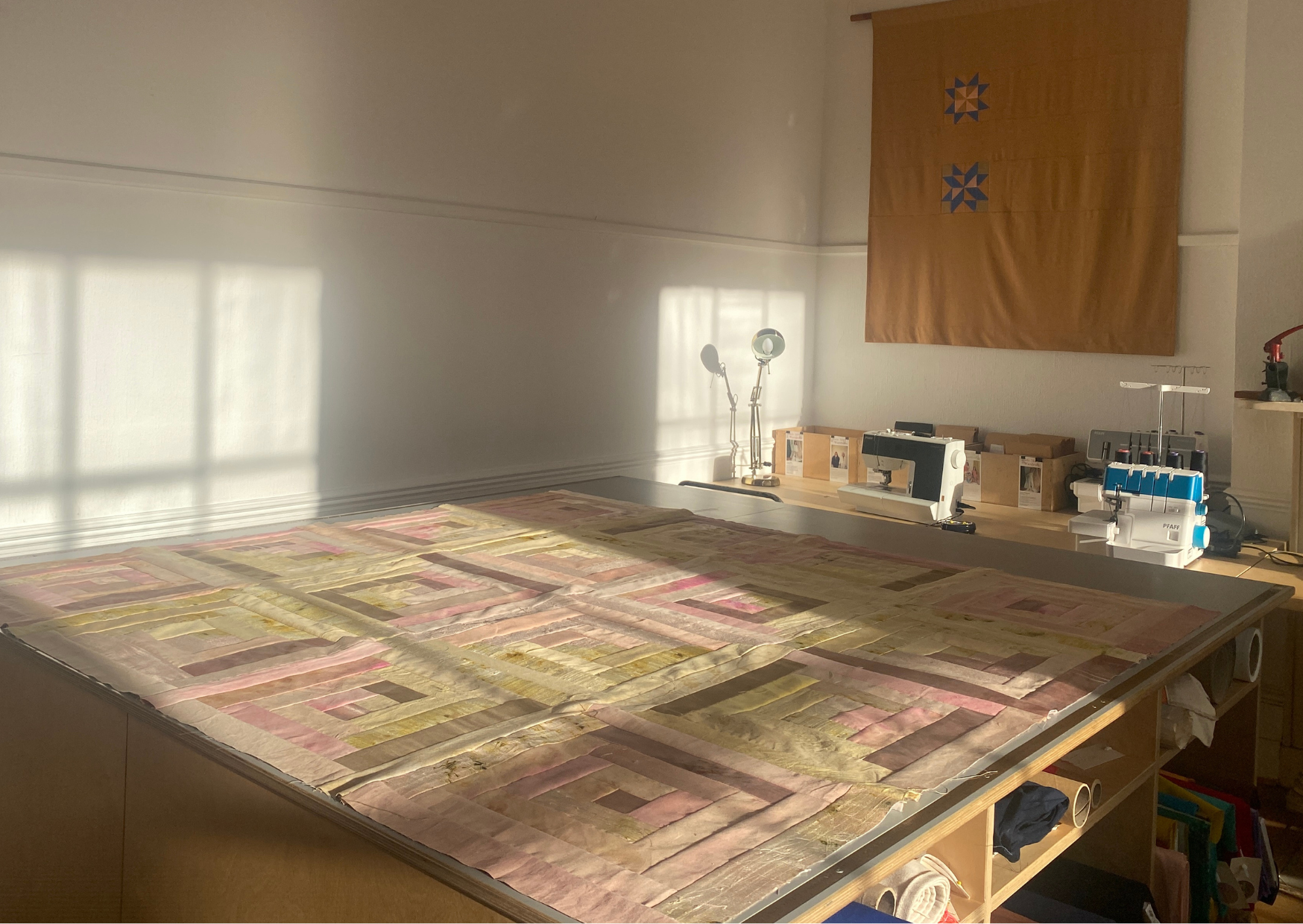
So, on to the back. I didn’t want a single solid piece, but a gathering of all the naturally dyed colours, large, generous swathes of cloth. I wanted to include a beautifully embroidered section from the edge of the sheet, but it needed its own backing so the wadding wouldn’t push through. I patched strips together, built the layers, stitched them down. I’m sorry I don’t have many photos of this stage of the process, but it’s in the video above.
I lay everything out on the table, the same table that dictates the maximum size of my double quilts. Any bigger and there’s nowhere flat enough to work. These friendly fabric bedfellows are joined in big, uncomplicated sweeps, and suddenly the back of the quilt is complete. It took far less time than the front, and yet I find myself wondering if I like it more in its simplicity.
That’s the joy of a quilt, I suppose, you can choose which side to live with. I layer everything up and begin basting. It’s late. I should stop. I don’t. I just want to quilt a little, to see how it might look. But tired eyes and lazy hands lead to mistakes, and the rest must wait until morning.
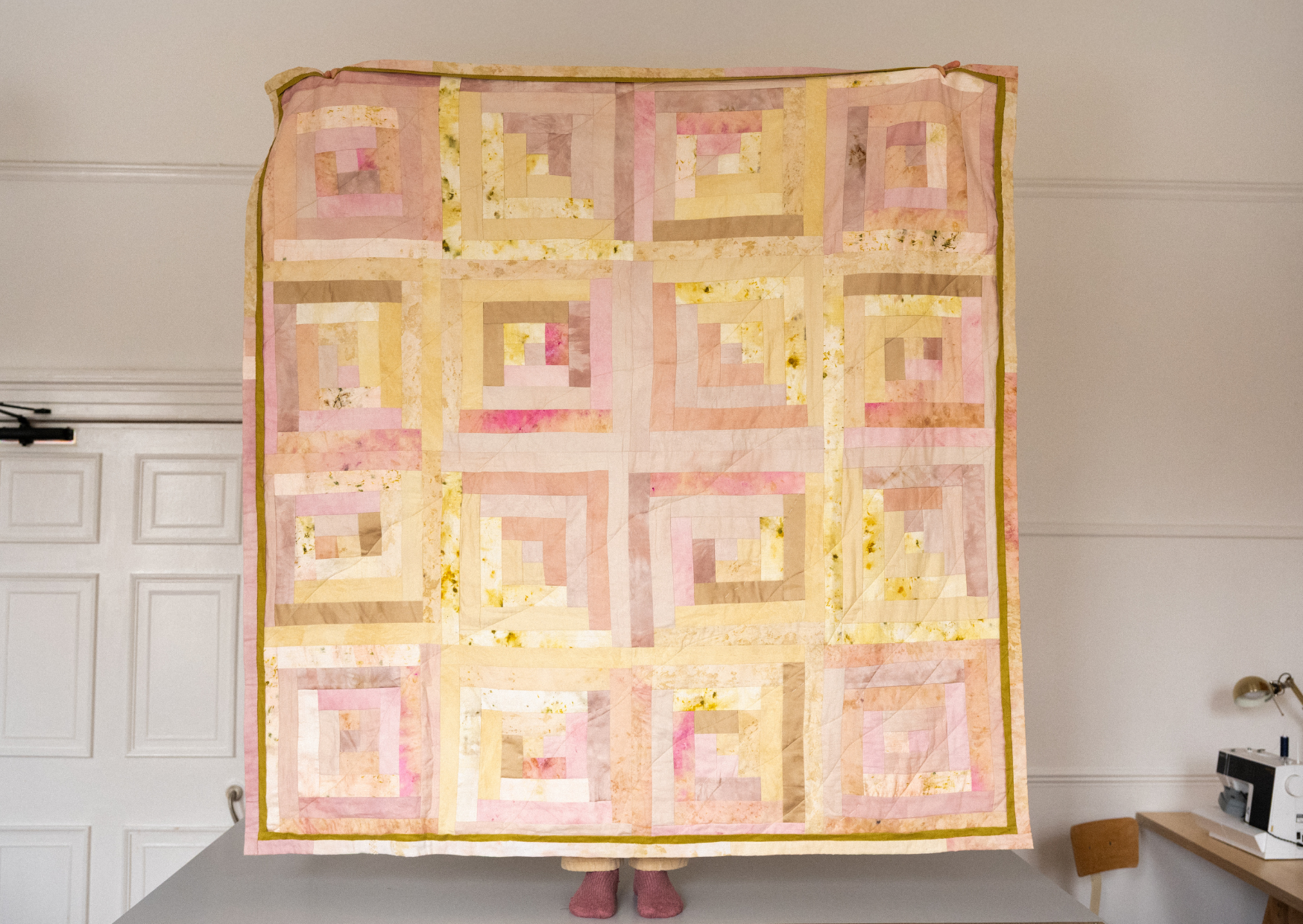
I decide not to follow any straight lines, instead quilting freestyle, wavy diagonals across the piece, something looser, wilder, to rub up against the strict geometry of the log cabin. I’m not sure I love it, but I’ve already finished a third, and I love the idea of unpicking it even less.
Then comes the familiar creative whiplash: it all suddenly feels too pastel. I hate it! That classic, inevitable moment in the creative process. I know I’ll come back around eventually, usually after a tweak or two. I add a solid pistachio green border, hoping to pull it out of pastel land. It helps a little. I think.
I finish by binding the quilt using the backing fabric.
As I hand-stitch the binding closed, I’m grateful for this quiet, steady way of marking a moment that was so emotional, so full, so overwhelming. A wedding day passes in a heartfelt blur of stimulation and exultation. This cloth brought me back. Rooted me again in the love of it all.